


Your Shopify theme plays a critical role in how customers perceive your brand, navigate your store, and interact with your products. A well-designed storefront can strengthen credibility, improve user experience, and support higher conversion rates from the moment visitors arrive. While premium themes offer additional customization options, many of the best free Shopify themes provide the essential features needed to build a professional, high-performing ecommerce store. This guide rounds up the 12 best free Shopify themes that deliver exceptional value without adding to your startup costs.
What to consider when choosing a free Shopify theme
Not every free Shopify theme delivers the same level of performance, flexibility, or user experience. Before selecting a theme, it’s important to evaluate the factors that will have the biggest impact on your store’s appearance, functionality, and long-term growth.
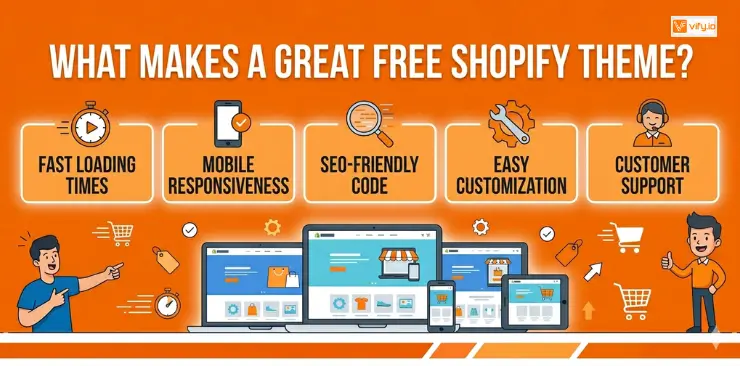
Performance and Core Web Vitals
Website speed plays a direct role in both user experience and search visibility. Google’s Core Web Vitals metrics — Largest Contentful Paint (LCP), Cumulative Layout Shift (CLS), and Interaction to Next Paint (INP) — are used to assess page performance and can influence SEO rankings. A poorly optimized theme can lead to slower load times, higher bounce rates, and reduced conversions. For the best results, prioritize themes built on Shopify’s Online Store 2.0 architecture, which is designed with modern performance standards in mind.
Mobile-Friendly Experience
Mobile devices now account for the majority of ecommerce traffic, making responsive design a necessity rather than a nice-to-have feature. Your storefront should provide a seamless browsing experience across different screen sizes, particularly on smartphones where most customers will first encounter your brand. While all themes in the Shopify Theme Store support mobile responsiveness, the quality of that experience can vary, so it’s worth reviewing the mobile preview carefully before making a decision.
Customization Options and Built-In Sections
One of the biggest advantages of modern Shopify themes is the ability to customize layouts without coding. Through Shopify’s section-based editor, merchants can build and modify pages using drag-and-drop functionality. The strongest free themes typically include a wide range of pre-designed sections, such as hero banners, featured collections, image galleries, promotional blocks, and customer testimonials, allowing you to create a more tailored storefront with minimal effort.
Compatibility with Shopify Apps
Most growing ecommerce businesses depend on third-party apps to extend store functionality. Product reviews, email marketing, upsells, subscriptions, and loyalty programs often become essential as a store scales. Choosing a theme that works smoothly with popular Shopify apps helps prevent display issues, compatibility conflicts, and unnecessary development work later on.
Design That Matches Your Brand
Visual style should always align with the products you sell and the audience you serve. A clean, minimalist layout may work well for beauty, fashion, or lifestyle brands, while stores selling industrial equipment or technical products often require a more information-focused design. Consider your product imagery, brand identity, and customer expectations when evaluating themes to ensure the overall shopping experience feels cohesive and professional.
Not all free themes are created equal. Before you install the first one that catches your eye, it’s worth understanding what separates a great free theme from a mediocre one.
The 12 Best Shopify Themes for Free
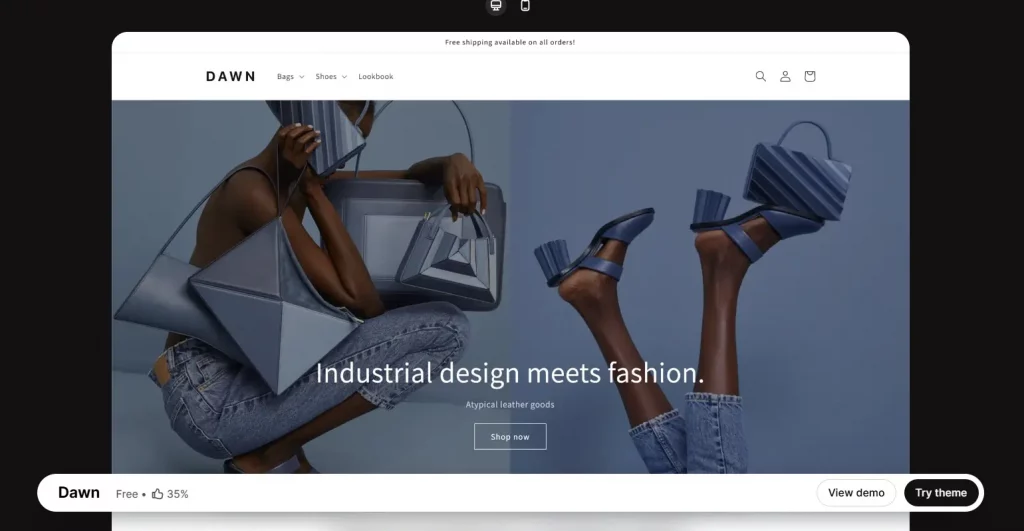
1. Dawn
Best for: Any store type; the go-to default for most new merchants.
Key features:
- Clean, image-forward layout with generous whitespace
- Sticky header and mega-menu navigation
- Quick-add-to-cart and quick-view product tiles
- Color scheme editor with live preview
- Full Shopify OS 2.0 sections on all pages
Pros: Extremely versatile, lightning-fast load times, Shopify’s flagship free theme.
Cons: Very popular — your store will not look unique without customization.

2. Sense
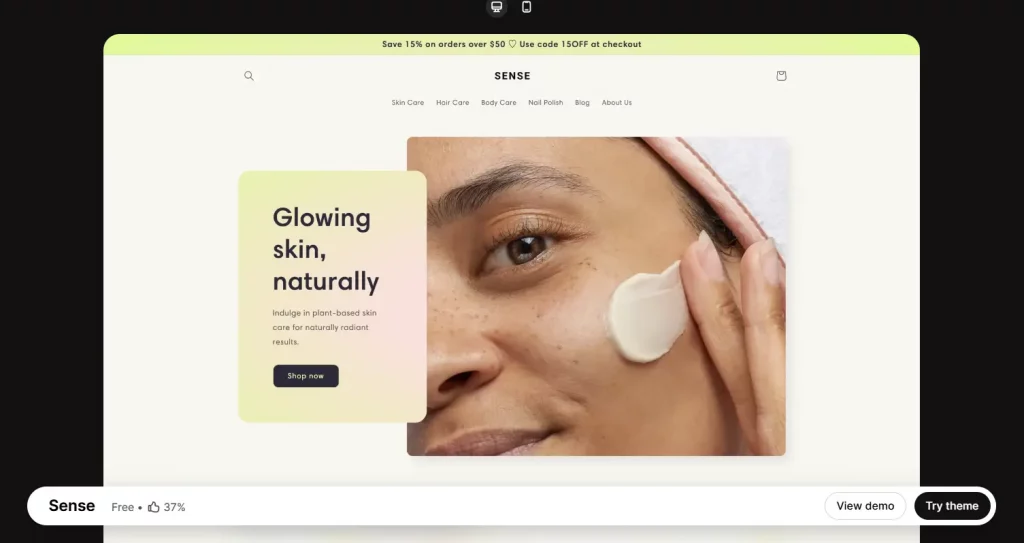
Best for: Skincare, cosmetics, supplements, wellness products.
Key features:
- Soft pastel color palettes built in
- Product ingredient/feature highlight sections
- Sticky add-to-cart bar on product pages
- Editorial-style homepage layouts
- Trust badge and review sections
Pros: Beautiful out of the box for beauty niches, highly feminine aesthetic.
Cons: Less suited for tech, industrial, or masculine brand identities.

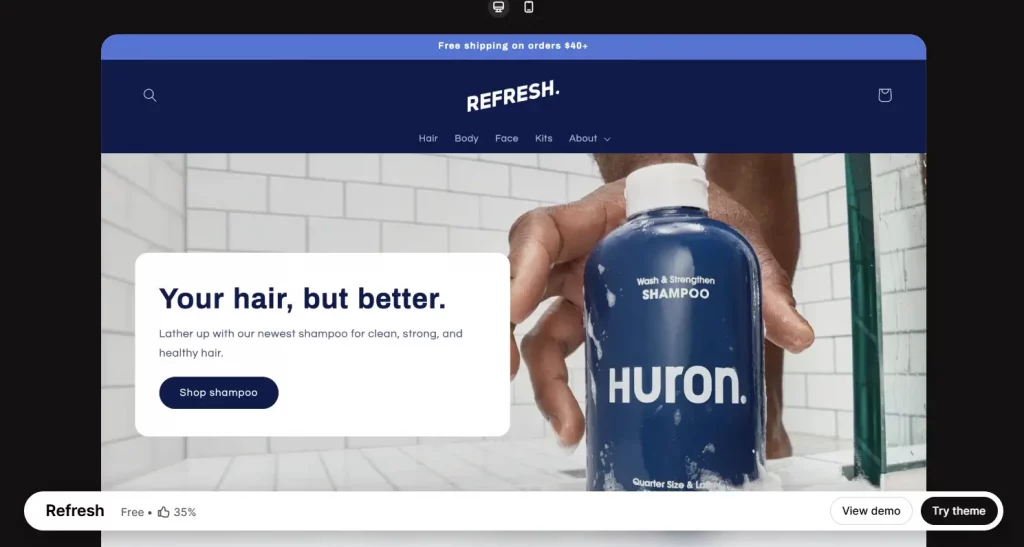
3. Refresh
Best for: Lifestyle brands, home goods, sustainable products.
Key features:
- Bold typographic headers and generous padding
- Featured collection with hover zoom effects
- Multi-column menu support
- Announcement bar with countdown timer
- Optimized for large hero images
Pros: Timeless minimal look that ages well and loads quickly.
Cons: Requires high-quality photography to look its best.

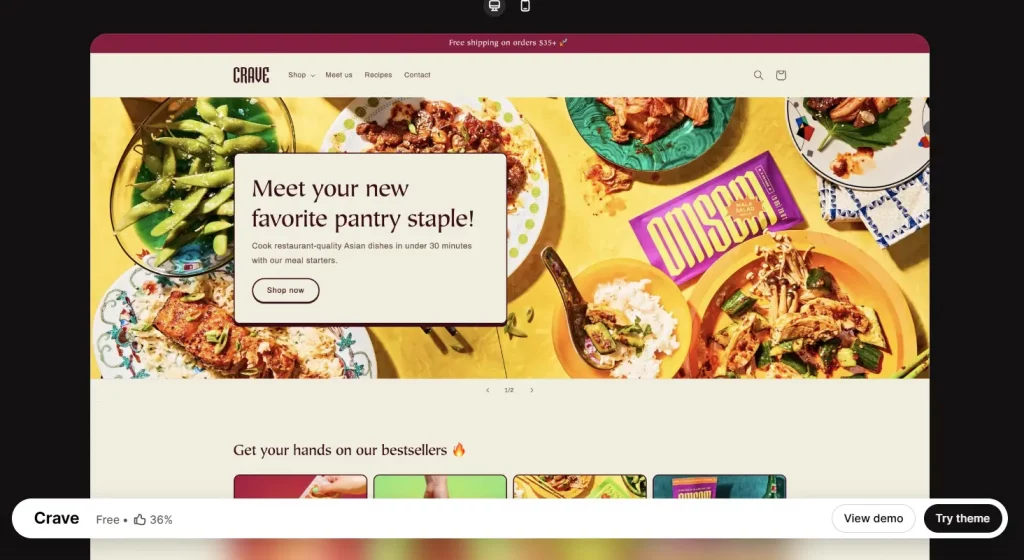
4. Crave
Best for: Food brands, packaged goods, meal kits, coffee, snacks.
Key features:
- Warm, appetizing color palette options
- Menu-style product list layouts
- Featured recipe or blog section
- Full-width banner sections for mouth-watering imagery
- Instagram-style image grid for social proof
Pros: Instantly communicates warmth and appetite appeal.
Cons: Niche-specific — can feel out of place for non-food stores.

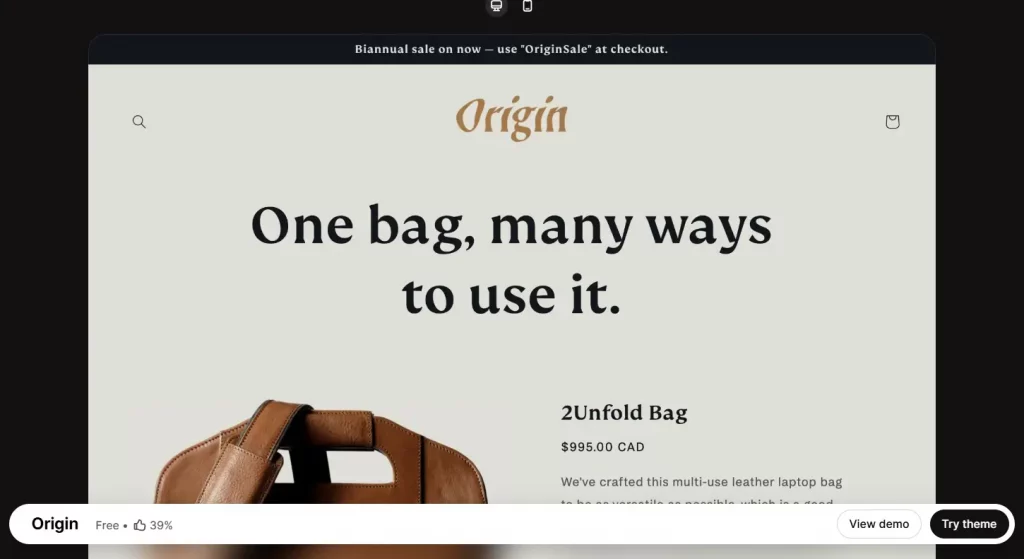
5. Origin
Best for: Handmade crafts, pottery, jewelry, art prints.
Key features:
- Organic, earthy color schemes
- Storytelling-focused homepage sections
- Large product photography with minimal UI chrome
- About/maker story section built in
- Supports custom fonts
Pros: Feels human and authentic — perfect for creator-led brands.
Cons: Limited layout variations compared to Dawn.

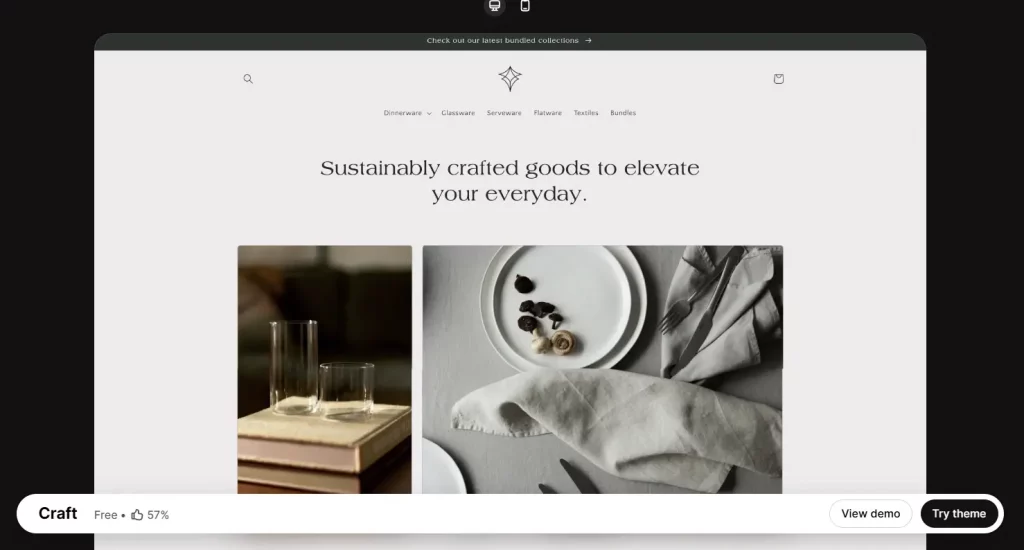
6. Craft
Best for: Boutique stores, limited-edition drops, single-product brands.
Key features:
- Product-page-first layout philosophy
- Large add-to-cart button and variant selectors
- Trust signals (shipping, returns) near the buy button
- Clean, editorial-style typography
- Works well with 1–50 SKUs
Pros: Conversion-focused design reduces purchase friction.
Cons: Not ideal for large catalogs — navigation can feel limited.

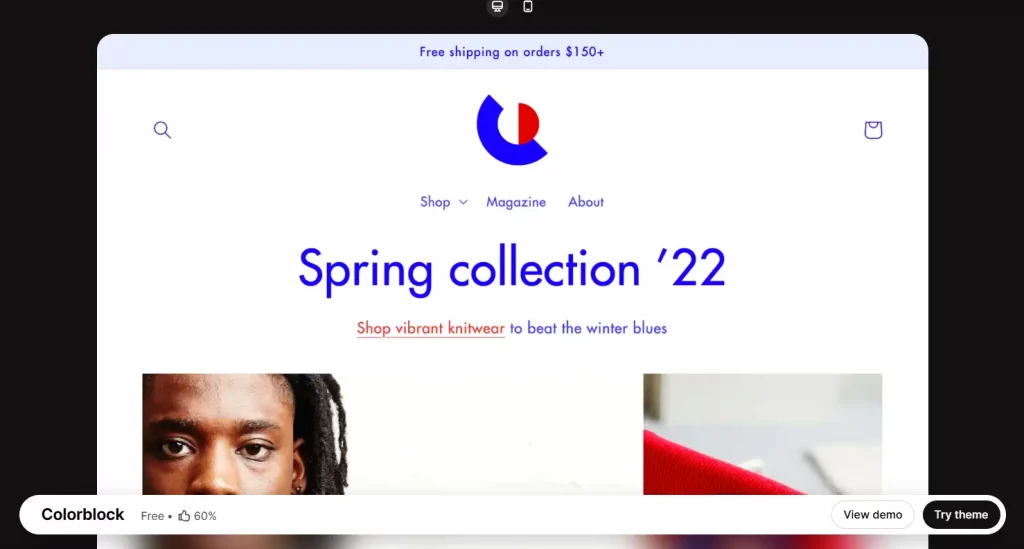
7. Colorblock
Best for: Streetwear, youth fashion, creative agencies, pop-up brands.
Key features:
- Vibrant color-blocking layout sections
- Oversized typography options
- Horizontal scroll product collections
- High-contrast UI designed for impact
- Playful hover animations
Pros: Visually unforgettable — makes an immediate brand statement.
Cons: Not suitable for luxury or understated brands.

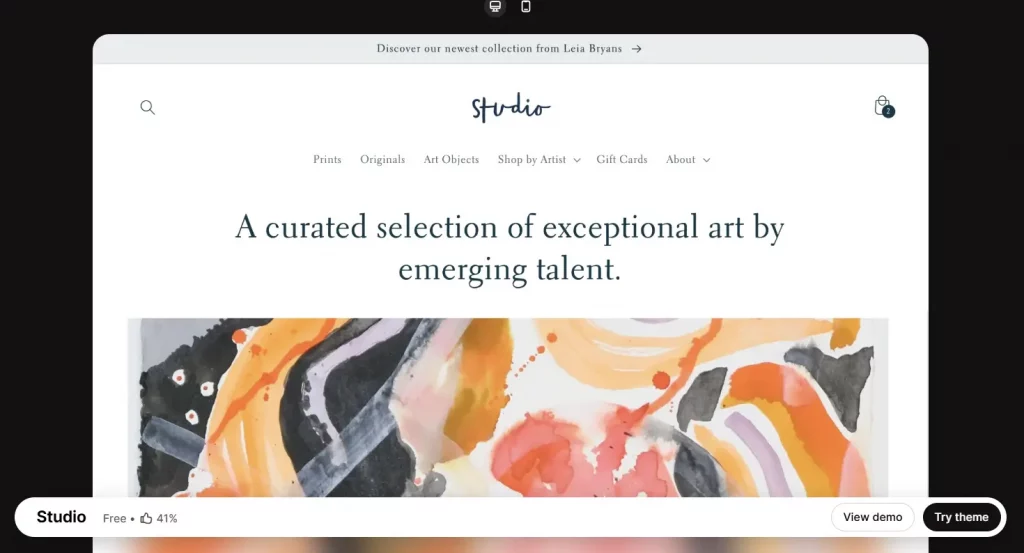
8. Studio
Best for: Photographers, artists, digital downloads, print-on-demand.
Key features:
- Portfolio-style homepage grid layout
- Full-screen image gallery sections
- Minimal navigation to keep focus on visuals
- Built-in video background support
- Clean checkout flow
Pros: Let’s photography do the talking — extremely minimal chrome.
Cons: Needs strong visual assets; looks sparse without them.

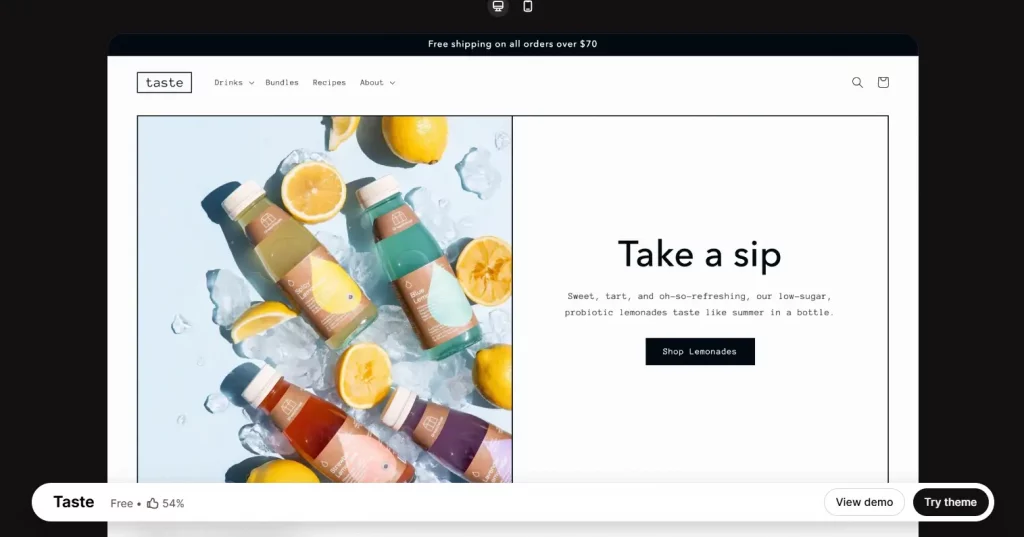
9. Taste
Best for: Wine, spirits, gourmet foods, specialty coffee, tea.
Key features:
- Rich, dark color palette options
- Feature callout sections for ingredients or provenance
- Age verification gate built in
- Full-width product storytelling layouts
- Pairs well with subscription app integrations
Pros: Premium feel without a premium price tag.
Cons: Dark aesthetic does not suit all product categories.

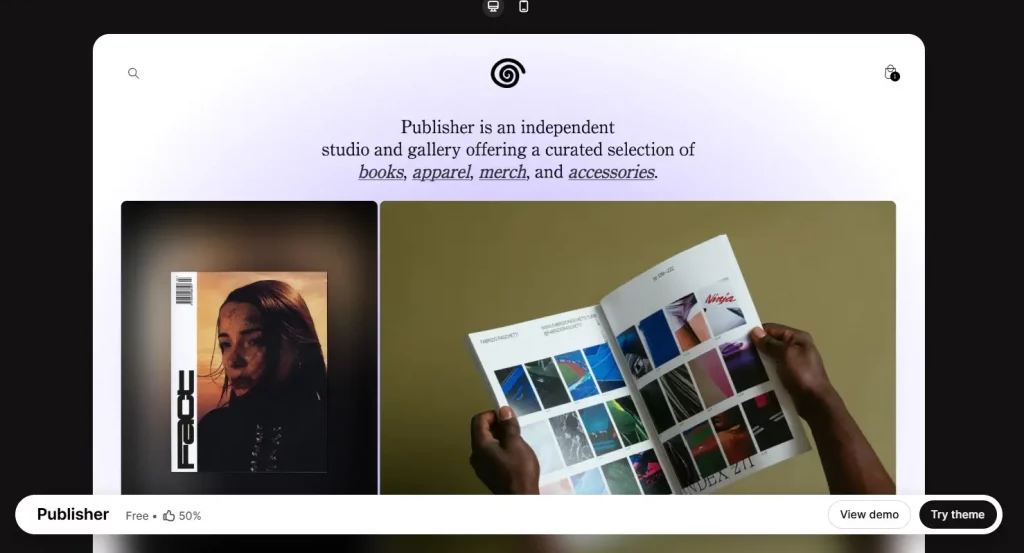
10. Publisher
Best for: Book stores, magazines, editorial brands, niche media.
Key features:
- Blog-and-shop hybrid layout
- Featured article sections on homepage
- Readable typography optimized for long-form content
- Category filter for large blog archives
- Clean product pages with rich text support
Pros: One of the few free themes built for content-commerce hybrid stores.
Cons: Less suited for purely transactional product catalogs.
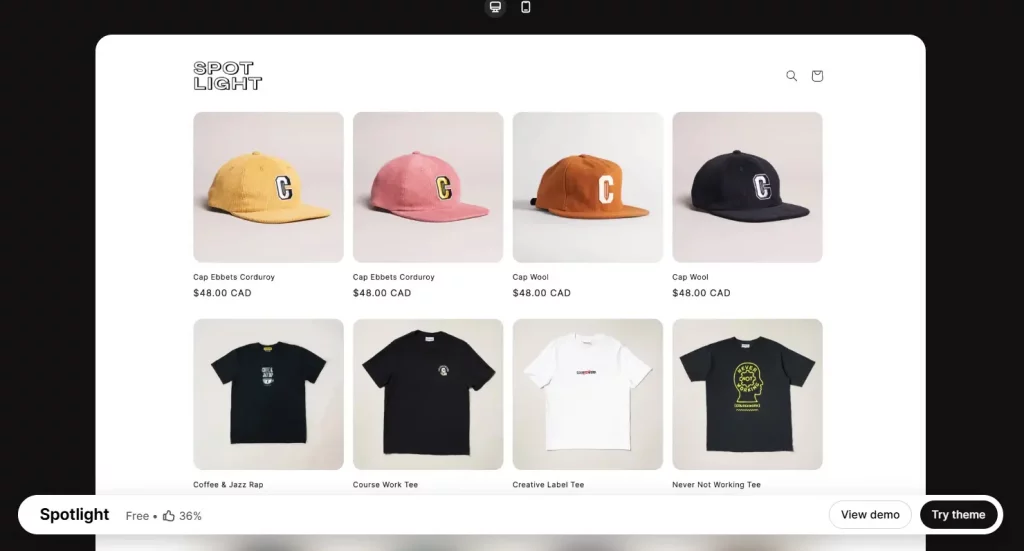
11. Spotlight
Best for: Launch pages, crowdfunding products, hero product stores.
Key features:
- One-page-style scrolling experience
- Feature callout and social proof sections
- Bold countdown/urgency elements
- Email capture section
- Minimal navigation to reduce exit points
Pros: Purpose-built for conversion on a single product.
Cons: Difficult to scale to multi-product catalogs.

12. Ride
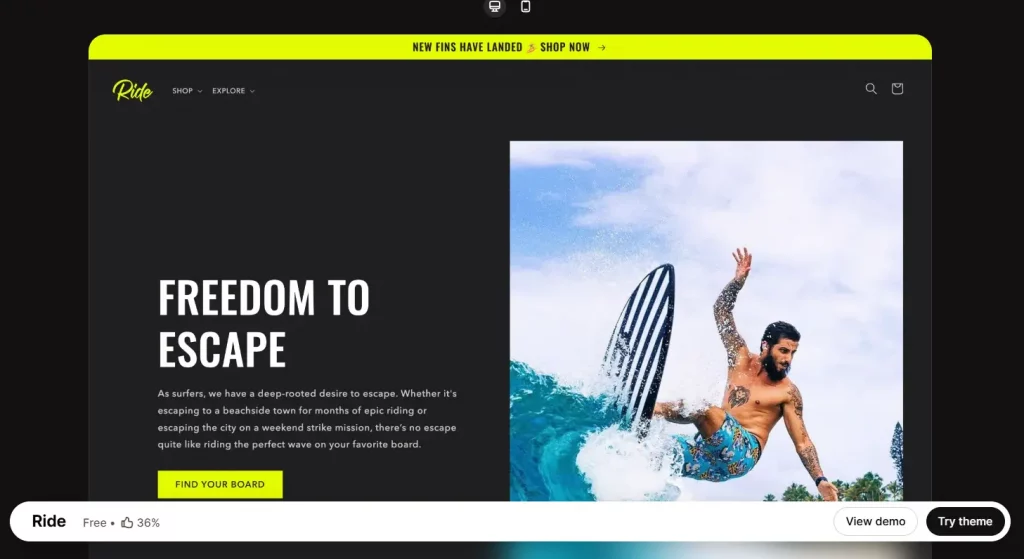
Best for: Cycling, outdoor gear, fitness equipment, activewear.
Key features:
- Action-oriented hero sections with video support
- Feature comparison sections for technical products
- Dark, energetic color themes
- Sticky navigation with active category tabs
- Built for high-impact product photography
Pros: Communicates performance and energy immediately.
Cons: Niche-specific aesthetic limits versatility.
Free Shopify Themes vs. Paid Shopify Themes
One of the most common questions merchants ask when building a store is whether a free theme is enough or if a paid option is worth the investment. In many cases, the answer is far more favorable to free themes than it was a few years ago. For a large percentage of Shopify stores, modern free themes provide all the functionality needed to launch and grow successfully.
The evolution of free Shopify themes
The introduction of Shopify Online Store 2.0 significantly raised the standard of free themes across the platform. Today’s official Shopify themes offer stronger performance, greater flexibility, and more customization options than earlier generations. Themes such as Dawn consistently achieve excellent Core Web Vitals scores and, in some cases, outperform premium alternatives that come with a substantial price tag.
Another important advantage is ongoing support. Because Shopify develops and maintains its own free themes, merchants receive updates, performance improvements, and compatibility enhancements whenever the platform evolves. This level of long-term maintenance is not always guaranteed with third-party premium themes.
When investing in a paid theme is worth it
Although free themes are suitable for most stores, certain business models may benefit from the additional functionality offered by premium themes. A one-time investment in a paid theme can be worthwhile when your store has more complex operational or design requirements.
Common scenarios include:
- Stores with extensive product catalogs that require advanced filtering and navigation options across multiple product attributes.
- Subscription-focused businesses that rely heavily on integrations with platforms such as Recharge and other recurring billing solutions.
- High-volume ecommerce brands where even minor improvements in site speed or user experience can generate meaningful revenue gains.
- Businesses that require specialized design features, such as sophisticated mega menus, enhanced product discovery tools, advanced cart experiences, or unique storefront layouts that are not available in standard free themes.
For most new and growing merchants, however, a high-quality free Shopify theme provides more than enough functionality to create a professional storefront, deliver a strong customer experience, and support future growth.
Conclusion
The best free Shopify themes are the ones that match your brand, support your growth goals, and deliver a smooth shopping experience from day one. Whether you’re launching a fashion store, a beauty brand, or a niche product business, choosing the right design can improve trust, user experience, and conversions without increasing your startup costs. While premium templates offer additional flexibility for advanced stores, many merchants can build a highly professional storefront by choosing a free best theme for Shopify. Start with a theme that fits your business today, then optimize and customize as your store grows.
If you’re selling on Shopify and need a professional invoice solution, especially one that’s easy to customize without any coding skills, then Vify’s Order Printer app Shopify is the best choice for you. Try it for free today and experience it for yourself. We’re confident you’ll love it.