


A successful dropshipping store takes more than a selection of popular products. Strong branding, appealing product presentation, a clear store layout, and effective marketing all play a role in turning visitors into customers. This guide explores 8 dropshipping store examples with winning ideas and highlights practical strategies worth considering for an ecommerce business.
What makes a dropshipping store feel like a real brand?
A basic dropshipping store often looks familiar: a standard Shopify theme, supplier photos, a generic store name, unrelated products, and prices set only slightly above supplier costs. Without a clear reason to trust the store, it becomes difficult to justify higher prices or build repeat customers.
The most interesting examples of Shopify dropshipping stores take a different approach. They usually do at least one of three things well:
- Build around a strong hero product that gives customers a reason to trust the brand.
- Own a specific audience so the store feels designed for a particular type of customer.
- Turn marketing into an asset through content, community, or distribution instead of relying entirely on paid ads.

8 best dropshipping store examples
There are many dropshipping store examples online, but the stores below are useful because each demonstrates a specific strategy. Together, they cover product positioning, branding, content marketing, pricing, customer trust, and product testing.
1. NotebookTherapy
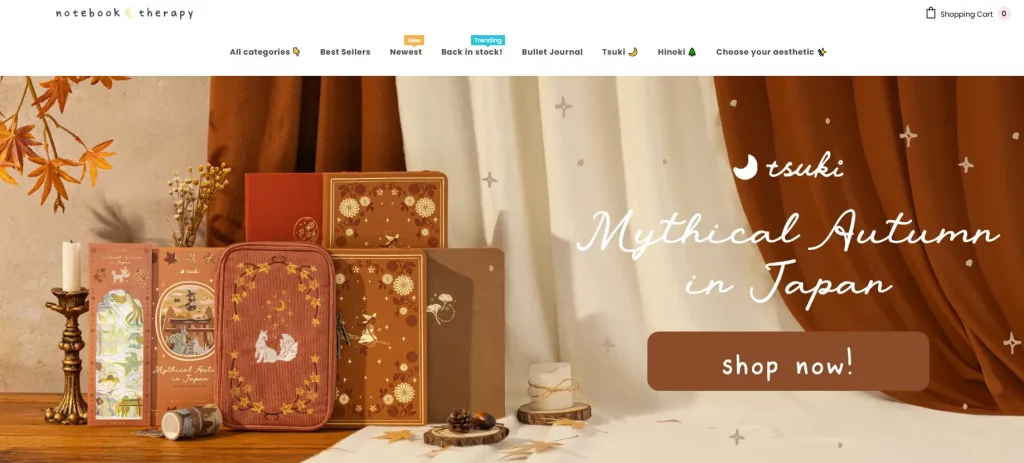
NotebookTherapy sells Japanese and Korean-style stationery, including bullet journals, washi tape, pens, and tote bags.
Stationery can be a difficult category for dropshipping because many products look inexpensive and interchangeable. NotebookTherapy addresses this by building its brand around a stronger hero product: the Tsuki journal.
The journal is positioned as a premium product with fountain-pen-friendly paper, reduced ink bleed, and carefully designed covers. This gives customers a clear reason to trust the store’s product quality. Once that trust is established, smaller products such as pens, tape, and bags feel more like carefully selected additions instead of random products sourced from a supplier.
This also supports a higher average order value. Customers have a reason to add complementary items because they already trust the main product, rather than simply responding to a discount.

2. Meowingtons
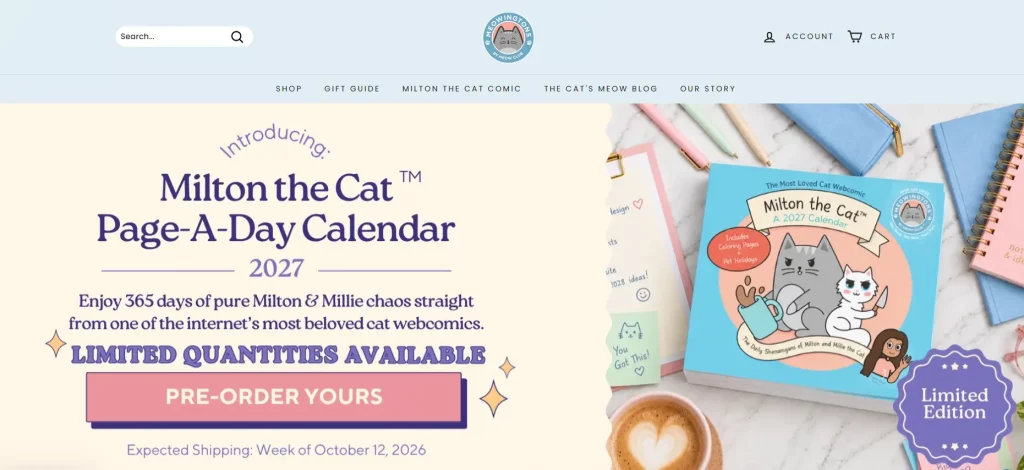
Meowingtons started in 2014 as a straightforward dropshipping store selling cat-themed products.
Instead of positioning itself simply as a place to buy cat accessories, the brand built an identity around being a destination for cat lovers.
One of its most recognizable content assets is Milton the Cat, a recurring comic-strip mascot used alongside viral cat memes. This gives people a reason to follow the brand and engage with its content before they are ready to buy. The store also uses gift guides and curated collections to turn its audience into shoppers more naturally than relying entirely on cold advertising.
Its charity connection, built around the message “You Shop. We Give. They Purr.”, adds another layer to the brand identity. Over time, Meowingtons also moved beyond pure dropshipping into warehouse fulfillment and branded products.
This is a useful example of Shopify dropship store growth: starting with supplier-based fulfillment and gradually building more control over inventory and branded products.

3. BURGA
Phone cases are one of the most competitive dropshipping categories. Thousands of stores sell products that look almost identical, making price a major part of the buying decision.
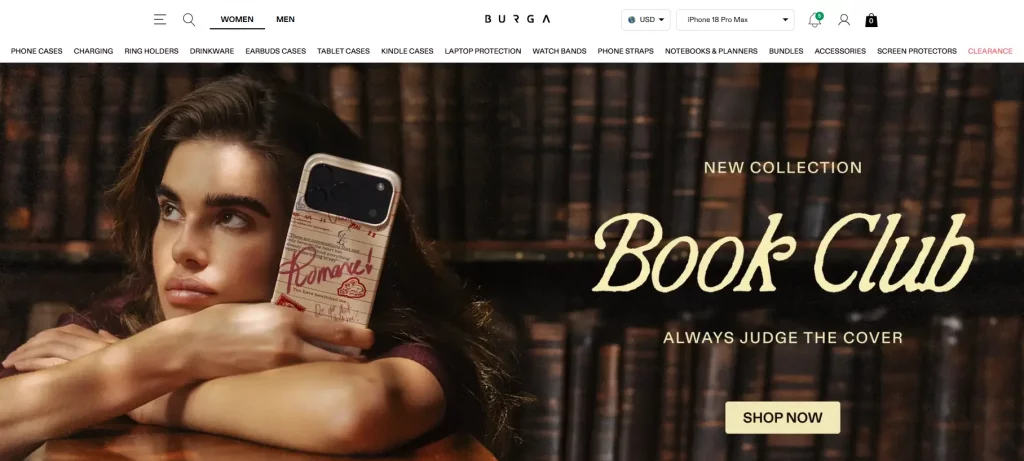
BURGA takes a different route by positioning phone cases as fashion accessories. Instead of organizing the shopping experience only around phone models and materials, the store emphasizes visual styles and designs. The experience feels closer to browsing a fashion catalog than searching through a technical accessories store. This changes the buying decision. Customers are encouraged to choose a case based on personal taste, which creates more room for premium pricing.
BURGA also uses bundle offers such as Buy 2 Get 2 Free to encourage customers to purchase multiple designs in one order.
Its visual marketing follows the same strategy. Instagram and TikTok content shows phone cases in everyday settings such as desk setups, outfits, and coffee shops. Micro-influencer seeding and user-generated content help reinforce the lifestyle positioning.
For anyone reviewing examples of Shopify dropshipping stores, BURGA demonstrates how presentation can become a competitive advantage even when the underlying product is highly commoditized.

4. Warmly
Warmly focuses on home decor and furniture, including products sourced through third-party suppliers.
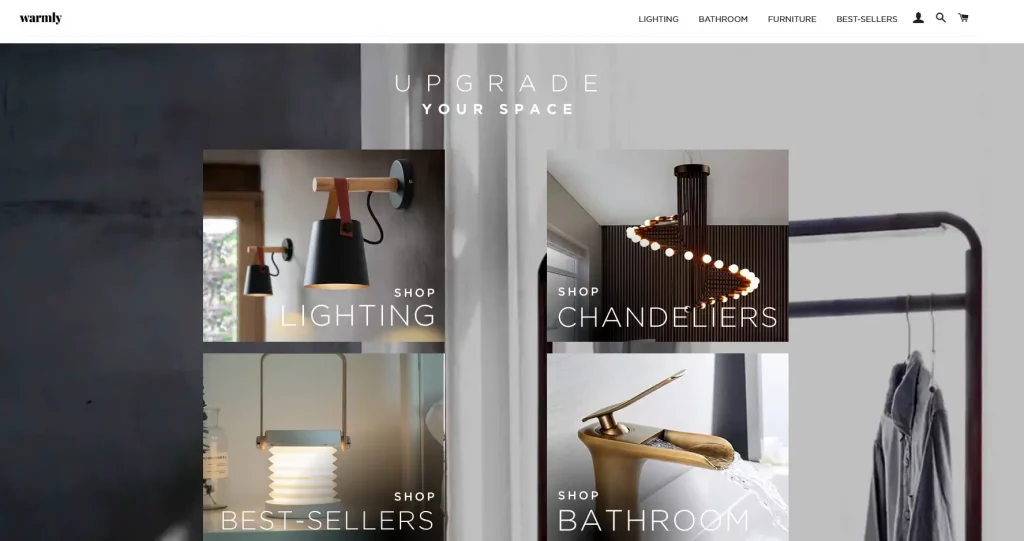
High-ticket dropshipping presents a major trust challenge. Customers are unlikely to spend significant amounts on furniture if the store looks like a basic supplier catalog. Warmly addresses this through premium presentation. Lifestyle photography, clean layouts, and a Scandinavian-inspired visual style make the store feel closer to a modern furniture retailer.
The marketing strategy is also important. Rather than depending only on paid ads, Warmly uses channels such as Pinterest and Google Images to reach people looking for interior design inspiration. This means the store can appear during the earlier stages of a customer’s buying journey, when someone is exploring ideas for a room rather than searching for one specific product.
Warmly is another example of Shopify dropship store positioning that shows how a premium customer experience can support products with higher price points.

5. BlendJet
Blenders are an established product category, so simply selling another blender would not create much differentiation.
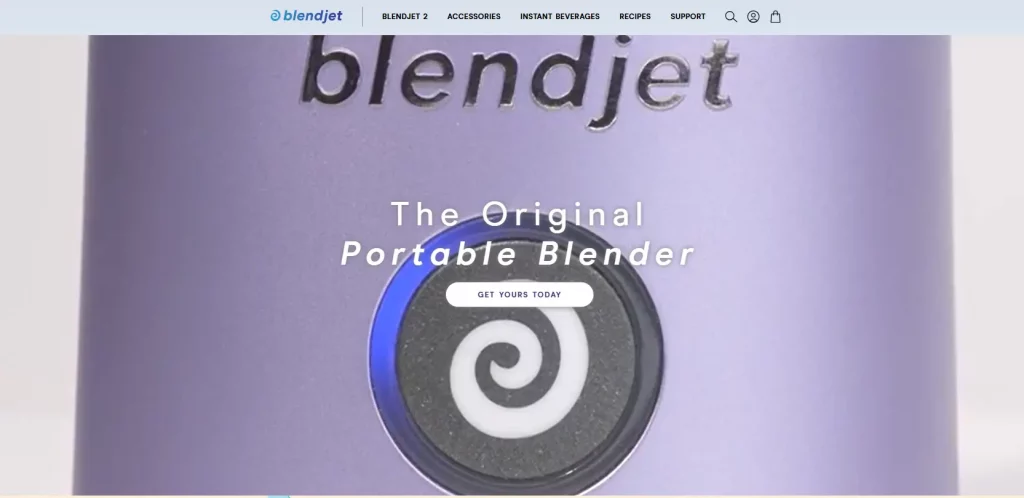
BlendJet reframed the product as a portable lifestyle gadget. Its rechargeable blender is designed around use cases such as the gym, office, travel, and everyday convenience. Short-form videos demonstrate the product in a simple sequence: ingredients go in, the button is pressed, and a smoothie is ready.
BlendJet also uses different colors and limited-edition collaborations to make the product feel more collectible. Instead of owning one basic appliance, customers have more reasons to consider additional versions.
Among the dropshipping store examples worth studying, BlendJet is particularly useful for understanding how a familiar product can gain a stronger identity through positioning and visual demonstrations.

6. Mighties
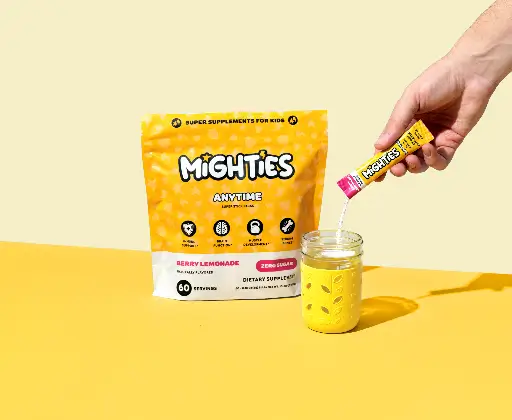
Mighties sells children’s supplements, making trust particularly important because the purchaser is buying for someone else.
Its product page is designed to reduce friction throughout the buying process. Customers can select flavor and quantity, see price changes, and encounter subscription options without leaving the main product experience.
Bright visual accents help guide attention toward important information and calls to action. The page also highlights product attributes through a comparison-style presentation, including sugar-free options, vitamin content, and the absence of artificial dyes.
One of the strongest trust elements is the 60-day money-back guarantee. Parents cannot know in advance whether their child will like a product, so reducing that risk can make the purchase easier.
Mighties also uses short-form video content built around relatable parenting situations rather than relying only on clinical or scientific messaging.

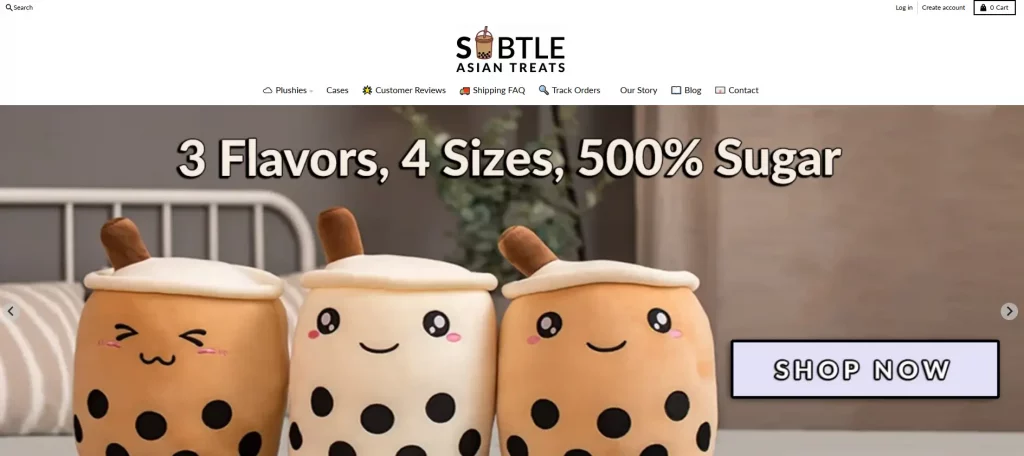
7. Subtle Asian Treats
Subtle Asian Treats sells bubble tea-themed plush toys and is a useful example of how product testing can shape a dropshipping business.
Before finding the right product, co-founder Tze Hing Chan tested several ideas, including phone cases, kitchenware, and martial arts products. Bubble tea plushies eventually showed much stronger potential.
This is an important part of many successful dropshipping businesses. The first product is not always the one that works. Testing different ideas can provide market information before more resources are invested in branding and inventory.
The store’s copy also feels more personal than a typical supplier listing. Product descriptions use a recognizable founder voice rather than simply copying generic product information. Another important detail is shipping transparency. Shipping times and product origins are clearly disclosed on the product page instead of being hidden until checkout.
That clarity helps set expectations and can reduce customer complaints, refunds, and chargebacks.

8. Inspire Uplift
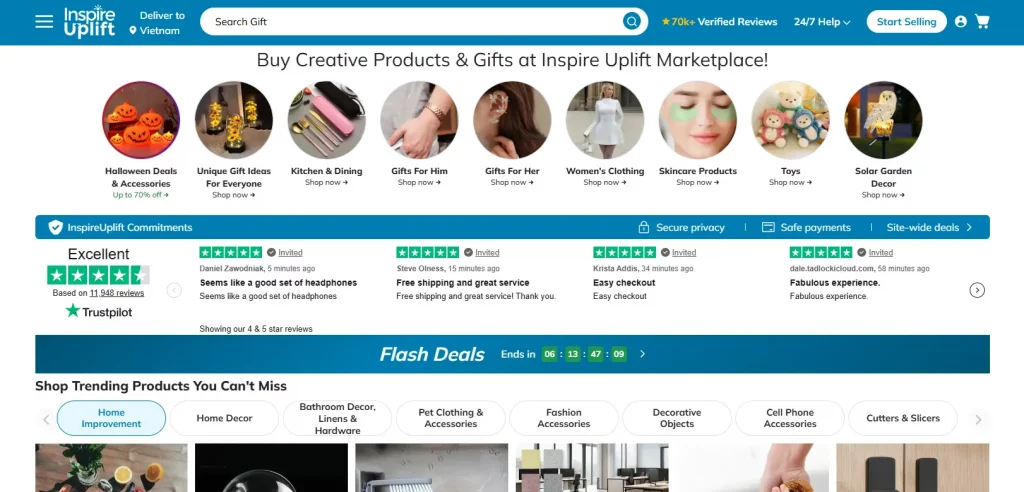
Many dropshipping guides recommend starting with a narrow niche, but Inspire Uplift shows that a general store can still work under the right conditions.
The store uses a broad catalog covering gadgets, home products, gifts, and other impulse-buy items. Its structure is closer to an online department store than a focused niche shop. Its marketing approach is particularly notable. Inspire Uplift has used Facebook content with humorous and meme-style posts that link directly to product pages.
The strategy fits products that are inexpensive enough for impulse purchases. Customers do not necessarily need extensive research before making a decision.
The tradeoff is the amount of testing and content production required. A broad catalog requires a steady flow of products, creative assets, and traffic to find enough winning combinations.

What successful dropshipping stores have in common
Across these dropshipping store examples, several patterns emerge.
1. They own a specific audience
Most of these stores are built around a recognizable customer identity.
Meowingtons focuses on cat lovers. Warmly appeals to design-conscious homeowners. Mighties speaks directly to parents. NotebookTherapy targets people interested in Japanese and Korean-style stationery.
A specific audience gives the store a clearer identity and makes product selection, messaging, and content easier to align.
2. They lead with a trust-building element
Strong stores give customers a reason to believe the product is worth buying.
NotebookTherapy uses its Tsuki journal as a quality anchor. Mighties uses a 60-day guarantee to reduce purchase risk. Warmly uses premium photography and presentation to support higher-priced products.
Trust does not always come from the product itself. It can also come from the way the product is presented and the risks addressed throughout the buying journey.
3. They turn marketing into an asset
The strongest stores do not rely entirely on paid traffic.
Meowingtons builds content around comics and cat culture. BlendJet uses short-form product demonstrations. Warmly uses Pinterest and visual search. These channels can continue attracting attention beyond a single advertising campaign.

4. They give customers reasons to buy more
A profitable store does not necessarily need to depend on a single product sale.
BURGA encourages multi-item purchases through bundles. Mighties uses subscriptions. NotebookTherapy offers complementary stationery products around its hero item.
These approaches create natural opportunities to increase the value of each order.
5. They are clear about the dropshipping experience
Subtle Asian Treats demonstrates an important point that is easy to overlook: transparency matters.
Shipping times, product origin, and fulfillment expectations need to be clear before checkout. A customer who knows what to expect is less likely to feel misled after placing an order.
Conclusion
The most useful dropshipping store examples show that a strong dropshipping business needs more than a good product. Clear positioning, a specific audience, trustworthy presentation, useful content, and a smooth customer experience can help a Shopify store stand out. Studying these examples of Shopify dropshipping stores can reveal practical ideas to adapt when building or improving a dropshipping store.
For Shopify stores looking for a professional invoice solution that’s easy to customize without any coding, Vify Shopify Order Printer app is worth considering. Try it for free and see how it fits your store’s needs.