


Managing inventory becomes increasingly difficult as your Shopify store grows. Tracking stock across multiple sales channels, preventing overselling, forecasting demand, and handling purchase orders can quickly overwhelm Shopify’s built-in inventory tools. That’s why many merchants turn to a Shopify inventory management app for greater automation and control. In this guide, we’ll compare the 6 best Shopify inventory management apps, highlighting their key features, pricing, and the type of business each solution is best suited for.
What to look for in an inventory management app for Shopify
Not every inventory management app for Shopify offers the same level of functionality. While many promise to simplify stock management, the features that truly matter often determine whether an app will support your business as it grows. Here are the key factors to evaluate before making your decision.
- Real-time inventory synchronization. Inventory should update the moment a sale is made, regardless of whether it comes from your Shopify store, a marketplace, or a physical retail location. Apps with delayed or batch syncing can increase the risk of overselling and inaccurate stock levels.
- Demand forecasting. The best apps analyze sales trends and inventory movement to forecast future demand, helping you plan replenishment for the next 30, 60, or even 90 days instead of reacting after products are already out of stock.
- Purchase order management. If you regularly restock from suppliers, look for an app that can generate, send, and track purchase orders from one place. Automating this workflow saves time and eliminates the need to manage inventory through spreadsheets and manual emails.
- Multi-channel and multi-location support. Businesses selling across other ecommerce platforms or multiple physical stores should choose an app that keeps inventory synchronized. Centralized inventory management reduces errors and makes stock control easier as your business expands.
- Flexible pricing. Many inventory apps charge based on monthly orders, revenue, or feature tiers. Before committing, consider how the pricing will scale with your business so your software costs remain predictable as sales grow.
- Easy migration from Shopify’s native tools. With Shopify gradually moving merchants away from Stocky, several apps now offer built-in migration tools that import suppliers, purchase order history, reorder points, and other inventory data. Choosing an app with a smooth migration process can significantly reduce setup time and help you transition without disrupting your operations.

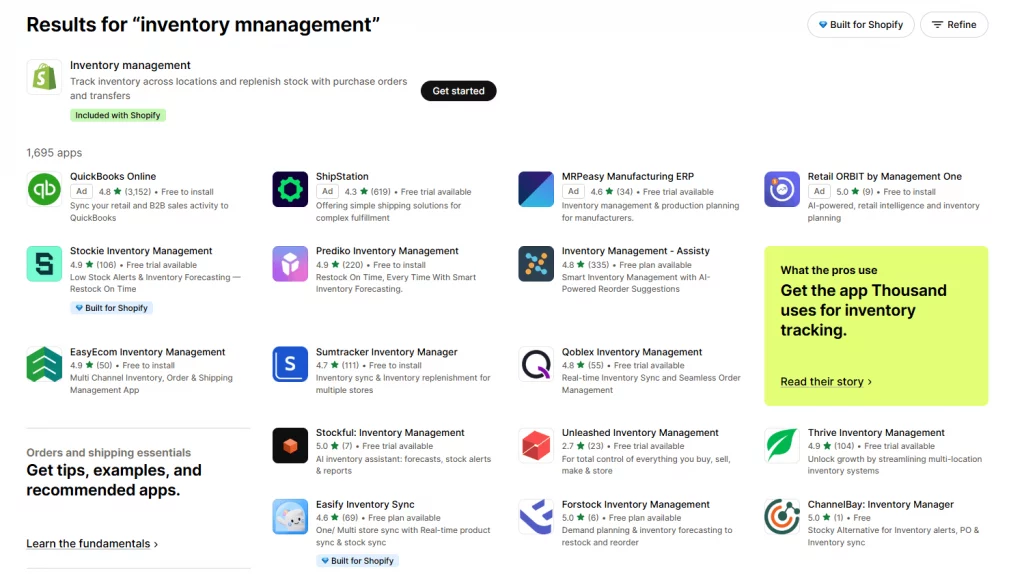
6 best Shopify inventory management apps
1. Prediko
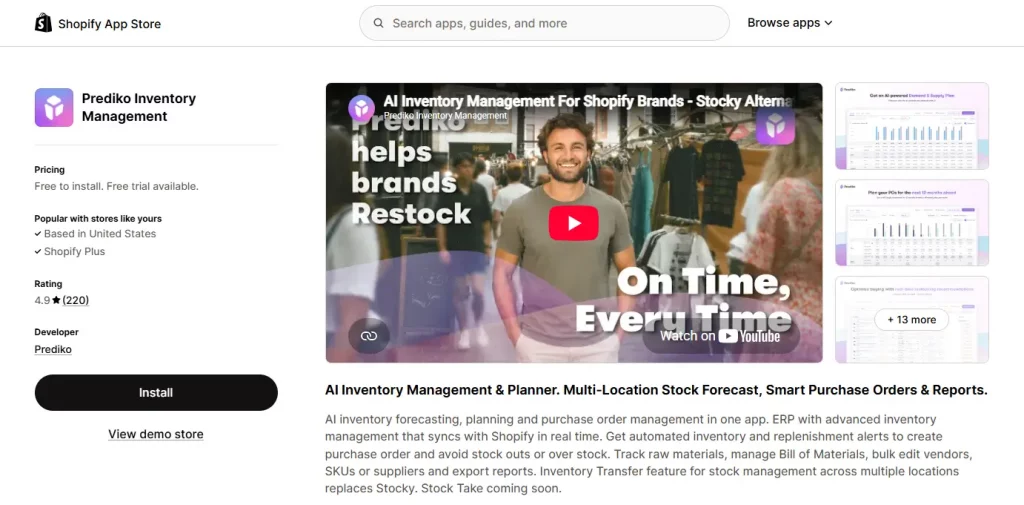
If demand forecasting is your top priority, Prediko is one of the strongest options available. This Shopify inventory management app helps merchants predict future demand, automate replenishment, and avoid costly stockouts. It also supports bill of materials, making it a solid choice for businesses that manufacture or assemble their own products.
Key features
- AI-powered sales forecasting with a 12-month purchasing calendar
- More than 70 integrations with WMS and 3PL providers
- 20+ customizable inventory reporting templates
- Inventory transfer tools for balancing stock between locations
- Dedicated migration support for merchants moving from Stocky
Pricing
Starter begins at $49/month for stores generating up to roughly $100K in revenue. Higher tiers include Scale-up ($119/month) and Growth ($199/month). Every paid plan comes with a 14-day free trial.
Drawbacks
Pricing is tied to store revenue rather than inventory size, so costs can increase quickly as your business grows. For stores with only a small catalog, Prediko may provide more functionality than necessary.

2. Assisty
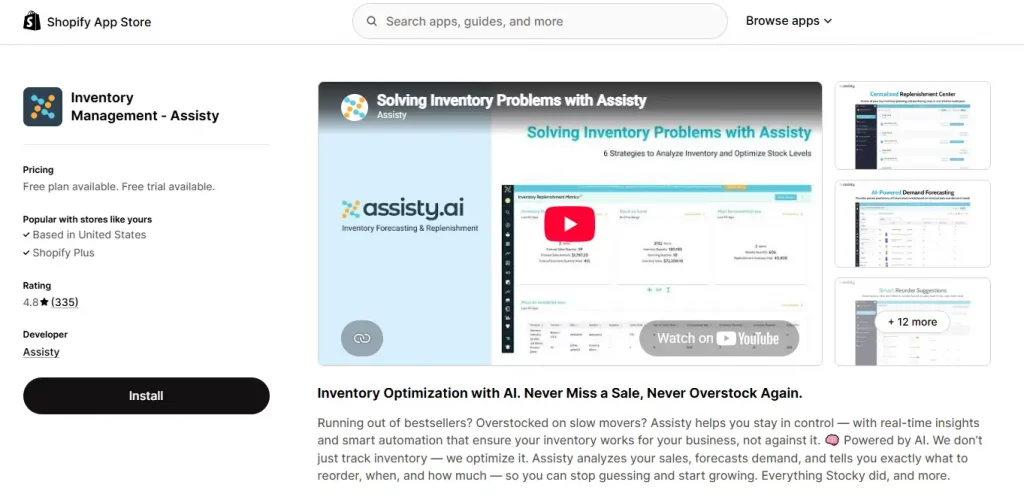
For merchants replacing Shopify Stocky, Assisty has become one of the most popular recommendations. This inventory management app for Shopify combines AI-driven replenishment with purchase order management and multi-location inventory tracking.
Key features
- Free plan with six months of historical sales data
- Automatic migration of suppliers and purchase orders from Stocky
- Bundle-aware inventory replenishment
- Multi-location inventory management
- Scheduled reports and AI reorder recommendations
Pricing
A free plan is available for basic inventory tracking. Paid plans start at $19/month for Basic Shopify, $59/month for Advanced Shopify, and $239/month for Shopify Plus. All paid plans include a 14-day free trial.
Drawbacks
The free plan is fairly limited, and pricing increases significantly for Shopify Plus merchants.

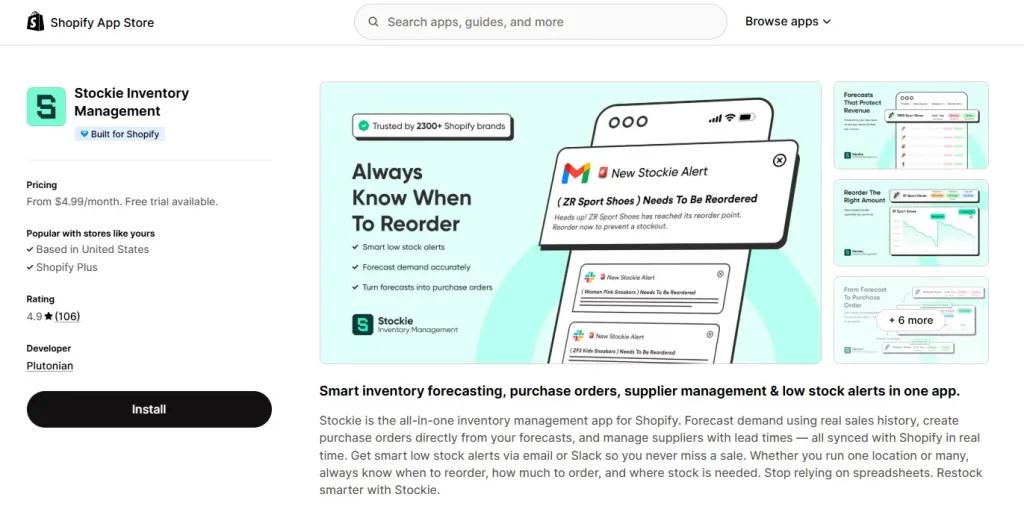
3. Stockie
If you’re looking for an affordable inventory management app for Shopify, Stockie is one of the most promising newcomers. Despite its low starting price, Stockie offers many features growing merchants need, such as demand forecasting, supplier management, and automated low-stock alerts.
Key features
- Demand forecasting based on historical sales data
- Automatic purchase order recommendations with PDF and CSV exports
- Low-stock notifications via email or Slack
- Supplier management with lead times and safety stock settings
- Unlimited inventory locations across every pricing tier
Pricing
Plans begin at just $4.99/month for the Basic tier. Advanced costs $9.99/month, Pro is $29.99/month, and Pro Plus is $59.99/month. All plans include a 14-day free trial.
Drawbacks
Although the pricing is very competitive, purchase order creation is only available on the Pro Plus plan. Merchants who mainly need purchase order management may find it frustrating to upgrade to the highest tier just to unlock that functionality.

4. Thrive Inventory Management
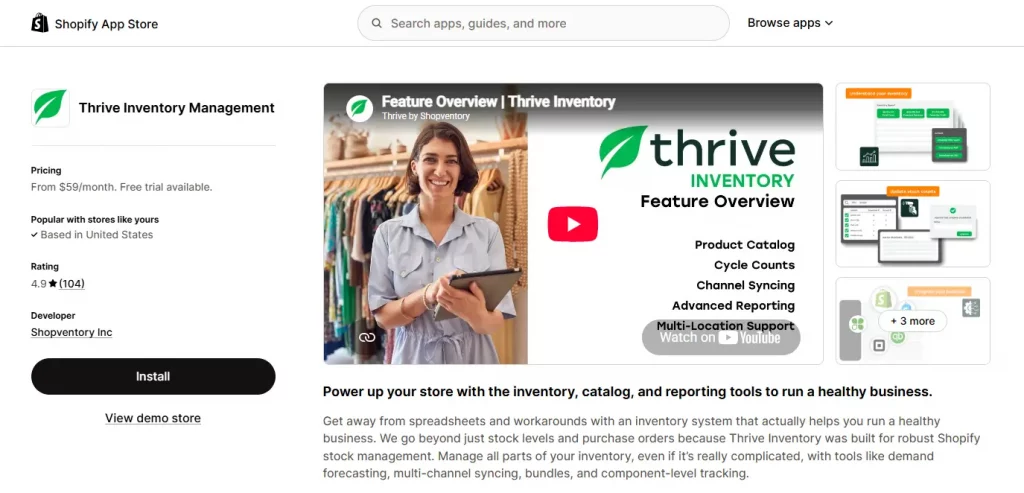
Thrive Inventory Management is designed for businesses that sell both online and in physical stores. Beyond inventory tracking, it provides detailed profit reporting, helping merchants understand not only what they’re selling but also how much they’re actually earning. For retailers looking for a Shopify inventory management app that combines inventory control with financial insights, Thrive is a compelling option.
Key features
- Built-in profit and cost of goods sold (COGS) reporting
- Barcode scanning for stock counts, receiving, and purchase orders
- Syncs multiple Shopify stores alongside POS systems such as Square and Clover
- AI-powered assistant for importing purchase orders and supplier invoices
- Native integration with QuickBooks Online
Pricing
Plans start at $59/month for Starter, Standard costs $129/month, Professional is $279/month, and Elite is $559/month. Every plan includes a 14-day free trial and is priced based on monthly transaction volume rather than SKU count.
Drawbacks
Demand forecasting is only available on the Professional plan and above, making the lower-priced tiers less attractive for merchants that need predictive inventory planning. Businesses processing a high number of monthly orders may also need to upgrade sooner because of transaction limits.

5. Sumtracker
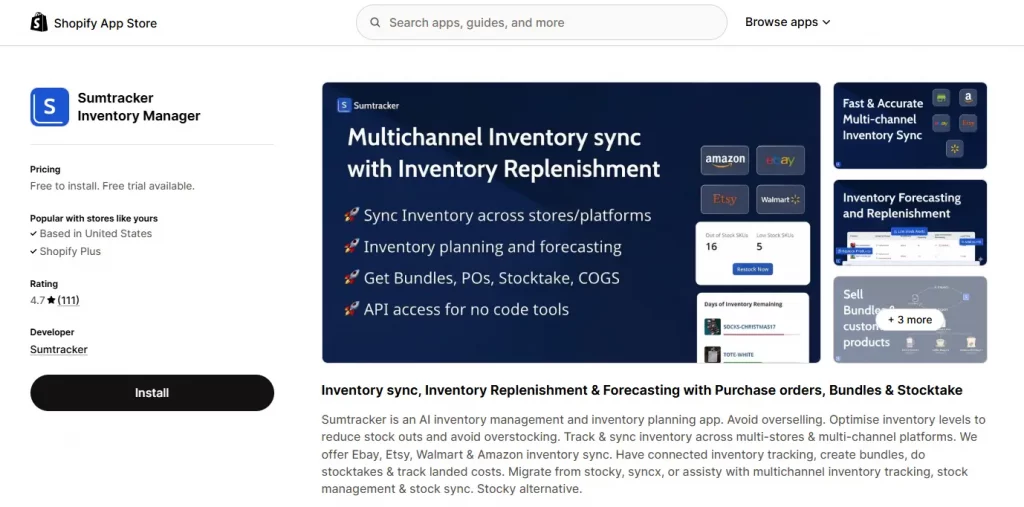
If your products are listed on Shopify alongside Amazon, Etsy, eBay, or Walmart, Sumtracker deserves serious consideration. This Shopify inventory management app keeps inventory synchronized across multiple channels, helping prevent overselling while also supporting product bundles and purchase order management.
Key features
- Native synchronization with Shopify, Amazon, Etsy, eBay, and Walmart
- Purchase orders with landed cost tracking
- Stocktake tools for physical inventory counts
- Supports migration from Stocky, Assisty, and SyncX
Pricing
The app is free to install. The Manage plan costs $59/month, while the Replenish plan, which adds forecasting and automated purchasing recommendations, costs $119/month. Enterprise pricing is available for larger merchants.
Drawbacks
The lower-priced Manage plan focuses primarily on inventory synchronization. Advanced forecasting features require the higher Replenish subscription.

4. Katana Cloud Inventory
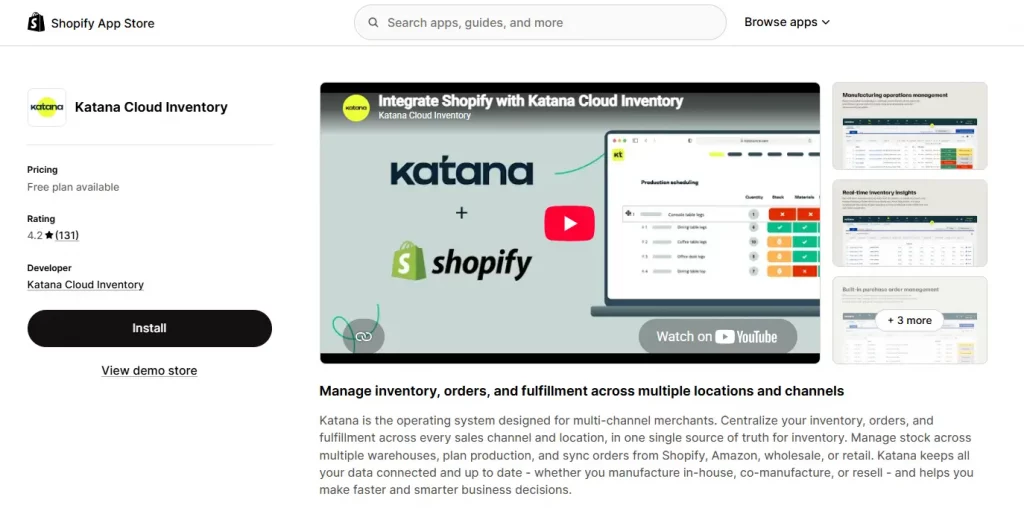
Unlike many apps designed primarily for retailers, Katana Cloud Inventory is a full manufacturing resource planning (MRP) platform. If you manufacture products rather than simply resell them, this may be the best inventory management app for Shopify, thanks to its production planning and raw material tracking capabilities.
Key features
- Production scheduling and manufacturing workflows
- Bill of materials (BOM) management
- Real-time inventory visibility across production and retail
- Native integrations with QuickBooks Online and Xero
- API access for custom automations
Pricing
A free plan supports up to 30 SKUs. Paid plans begin at $299/month, with additional charges depending on warehouse locations and order volume.
Drawbacks
Many merchants mention that optional add-ons can increase the final subscription cost well beyond the advertised starting price.

Conclusion
Choosing the right Shopify inventory management app can make a significant difference in how efficiently you manage stock, forecast demand, and scale your business. While Shopify’s built-in tools cover the basics, merchants with growing product catalogs or multi-channel operations will often benefit from a more advanced solution. Take the time to compare each app’s features, pricing, and integrations to find the one that best fits your workflow. With the best Shopify app for inventory management, you’ll spend less time handling inventory manually and more time focusing on growing your store.
If you’re selling on Shopify and need a professional invoice solution, then Vify Shopify Order Printer app is the best choice for you. Try it for free today and experience it for yourself. We’re confident you’ll love it.