


Many Shopify merchants know they’re paying transaction fees, but far fewer understand exactly how Shopify payment processing works or what those fees actually cover. Between card processing rates, payment gateways, currency conversion charges, and payout schedules, the true cost of accepting payments can be more complex than it first appears. This guide provides a complete breakdown of Shopify payment processing, helping you understand how money moves, what fees to expect, and how to make smarter decisions that support both profitability and long-term growth.
What is Shopify payment processing?
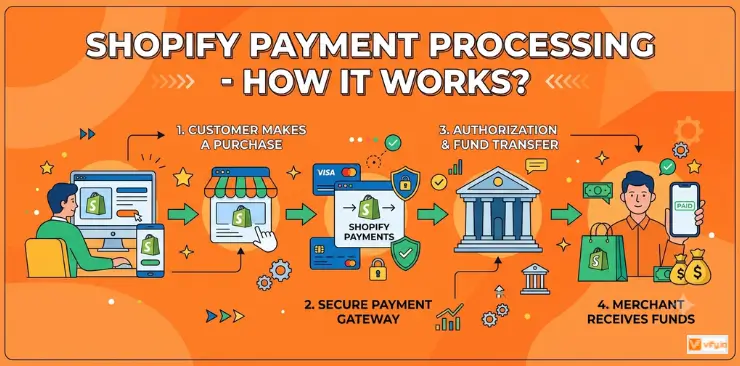
Shopify payment processing refers to the end-to-end system that handles the movement of funds from a customer’s bank to yours when an order is placed on your store. It encompasses the authorization of transactions, verification of funds, fraud screening, settlement, and final payout to your bank account.
When you use Shopify Payments, all of these steps happen within Shopify’s integrated infrastructure. When you use a third-party gateway, the processing is handled externally, but still triggered and coordinated through Shopify’s checkout system.
The payment processing lifecycle
At a high level, every Shopify transaction travels through five distinct stages: authorization, authentication, capture, settlement, and payout. Each stage involves different parties and different potential failure points. Most declined transactions occur at the authorization stage; most merchant frustrations (delayed payouts, held funds) occur at settlement.
Understanding where your money is at each stage gives you meaningful context when things go wrong, or when you’re trying to optimize.
Shopify payment processing vs. Traditional merchant accounts
Before platforms like Shopify existed, merchants had to set up a dedicated merchant account with an acquiring bank, negotiate interchange-plus pricing, and integrate a separate payment gateway. This was expensive, slow to set up, and required ongoing technical maintenance.
Shopify payment processing uses an aggregator model — Shopify Payments pools thousands of merchants under a single master merchant account, which is how it can offer instant setup without individual underwriting. The tradeoff is slightly less pricing flexibility compared to a dedicated merchant account, but the simplicity and integration benefits far outweigh the cost for all but the largest enterprises.

Shopify payment processing fees
Shopify payment processing fees are a stack of multiple charges that combine to determine your effective rate. Most merchants only see the headline processing rate and miss the others entirely.
Credit card processing rates
The core Shopify payment processing fee is a percentage of each transaction plus a flat per-transaction fee. This rate decreases as you upgrade your Shopify plan — reflecting the volume discounts Shopify can negotiate with card networks at higher merchant tiers.
| Fee Type | Basic ($39/mo) | Shopify ($105/mo) | Advanced ($399/mo) | Plus (custom) |
| Online card rate (Shopify Payments) | 2.9% + 30¢ | 2.6% + 30¢ | 2.4% + 30¢ | Custom |
| In-person card rate (POS) | 2.7% | 2.5% | 2.4% | Custom |
| 3rd-party transaction fee | 2.0% | 1.0% | 0.5% | 0.15% |
| Shop Pay Installments merchant fee | None extra | None extra | None extra | None extra |
| Currency conversion fee | 1.5% | 1.5% | 1.5% | 1.5% |
| Chargeback fee | None* | None* | None* | None* |
| Refund processing fee (flat) | Not returned | Not returned | Not returned | Not returned |
| Manual payment methods | $0 | $0 | $0 | $0 |
*Shopify does not charge a separate chargeback fee, but a lost dispute results in the full transaction amount being deducted from your payout, plus any network-assessed dispute fees (typically $15–$25) that Shopify passes through.
Third-party transaction fee
The single most misunderstood fee in payment processing Shopify merchants encounter is Shopify’s additional transaction fee for using third-party gateways. This fee (2.0% on Basic, 1.0% on Shopify, 0.5% on Advanced) is charged on every transaction processed through any gateway other than Shopify Payments, in addition to whatever that gateway charges. For merchants in Shopify Payments-supported countries, using a third-party gateway as your primary processor is expensive. The only rational scenarios for doing so are: Shopify Payments is unavailable in your country, or a specific third-party feature is worth the premium.
Currency conversion fees
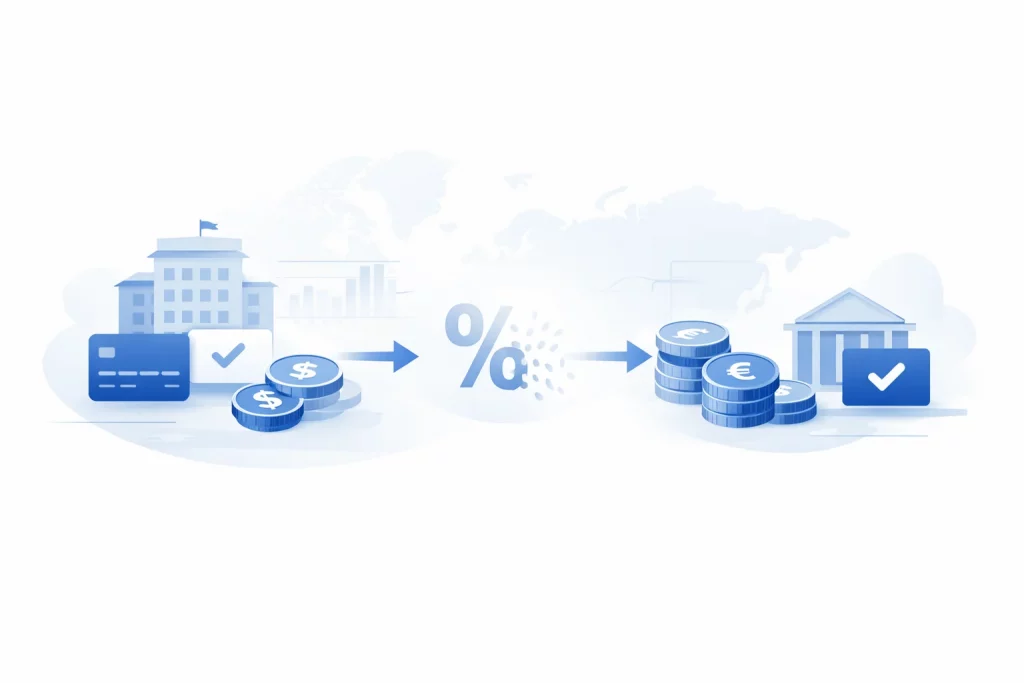
If your store sells in a currency different from your bank’s payout currency, Shopify charges a 1.5% currency conversion fee on the converted amount. This applies when you use Shopify Markets or sell to international customers who check out in their local currency.

Chargeback and dispute costs
Chargebacks are one of the most damaging processing costs. When a customer disputes a charge with their bank, the sequence of costs is:
- The disputed transaction amount is immediately deducted from your next payout
- A network-assessed dispute fee ($15–$25 depending on the card network) is passed through
- Staff time is spent gathering evidence and submitting a dispute response
- If you lose, the deducted amount is not returned and the fee is permanent
A high chargeback rate (above 0.9% of transactions) can trigger enhanced monitoring by card networks, which adds fees and leads to Shopify Payments account suspension. Keeping your chargeback rate low is both a cost management issue.
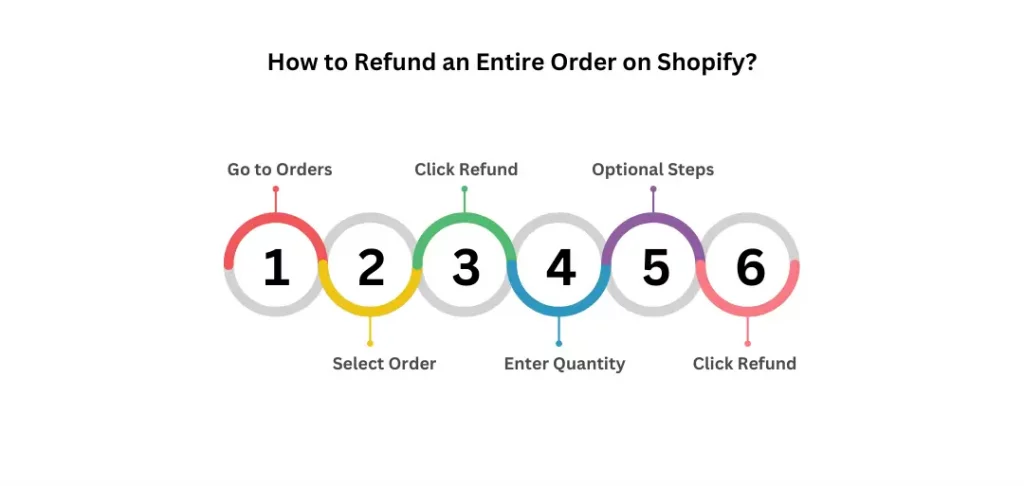
Refund Fee Behavior
When you issue a refund on Shopify, the percentage-based processing fee is returned to you by Shopify Payments. However, the flat per-transaction fee is not returned. It’s consumed regardless of the transaction outcome. For stores with high refund rates, this can add up meaningfully. On a Basic plan, 500 refunds per month cost you $150 in non-recoverable flat fees alone.

Reduce Shopify payment processing costs
Reducing your effective processing rate is a valuable ROI optimization activity. The savings are permanent and compound with every transaction.
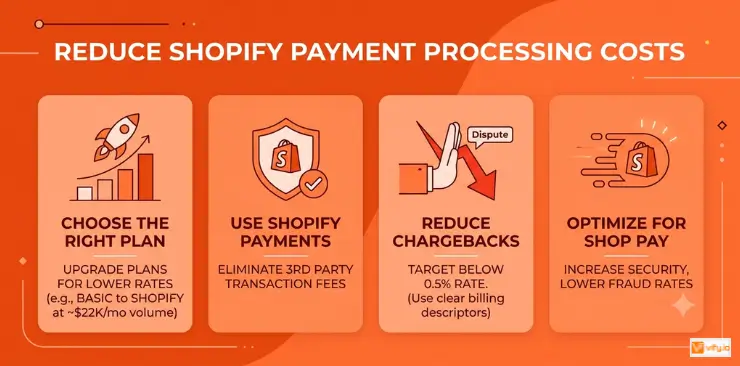
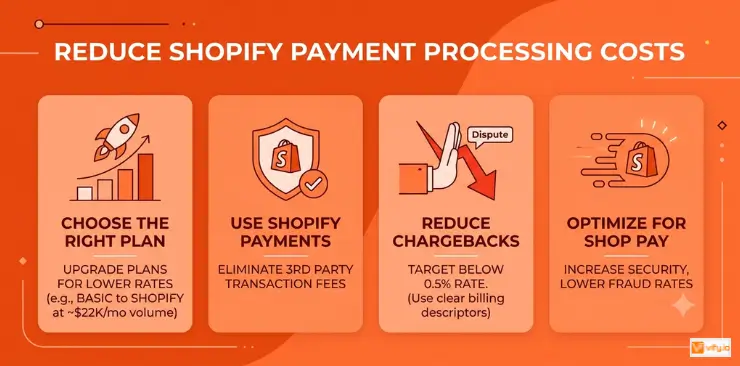
Choose the right Shopify plan
This is the most straightforward optimization and the one most merchants overlook. The plan upgrade break-even point is calculable:
| Plan Upgrade | Extra Monthly Cost | Processing Rate Saving | Monthly Volume to Break Even |
| Basic → Shopify | +$66/mo | 0.3% per transaction | ≈$22,000/mo ($264K/yr) |
| Shopify → Advanced | +$294/mo | 0.2% per transaction | ≈$147,000/mo ($1.76M/yr) |
| Advanced → Plus | Custom | Custom negotiated rate | Depends on negotiated rate |
At $22,000/month in revenue, upgrading from Basic to Shopify costs an extra $66/month but saves $66/month in processing fees (0.3% × $22,000). Above that volume, the Advanced plan pays for itself. Run this calculation against your actual monthly revenue to determine whether a plan upgrade makes financial sense right now.
Use Shopify Payments
If Shopify Payments is available in your country, there is almost no scenario where using a third-party gateway as your primary processor is cheaper. As shown in the true cost table above, adding Shopify’s 2.0% transaction fee on top of any third-party rate results in a dramatic cost increase. Enable Shopify Payments, eliminate the transaction fee, and add PayPal or other methods only as secondary options.
Reduce chargebacks
Every chargeback costs you the transaction amount, a dispute fee, and staff time. Bringing your chargeback rate below 0.5% (well under the 0.9% network threshold) protects your Shopify Payments account and eliminates one of the most variable processing costs. Key chargeback reduction tactics:
- Use clear, recognizable billing descriptors so customers recognize your charge on their statement
- Send detailed order confirmation emails immediately after purchase
- Provide proactive shipping notifications with tracking links
- Respond to customer service requests within 24 hours
- Enable Shopify’s fraud analysis and manually review high-risk orders before fulfilling
Optimize for Shop Pay
Shop Pay significantly reduces fraud rates compared to guest checkout. Customers using Shop Pay have previously verified their identity, reducing fraudulent orders and the associated chargeback costs. Promoting Shop Pay at checkout (via email reminders, site banners, and post-purchase account creation prompts) lowers your effective fraud-adjusted processing cost over time.
Conclusion
The real value of understanding Shopify payment processing lies in knowing exactly where your money goes after every sale. When you can clearly see how processing fees, payouts, refunds, and disputes affect your revenue, it becomes much easier to make decisions that support sustainable growth. Payment processing may operate behind the scenes, but its impact reaches every part of your business. A well-managed payment setup helps protect profit margins, reduces operational friction, and creates a smoother purchasing experience for customers.
If you’re selling on Shopify and need a professional invoice solution, then Vify Shopify Order Printer app is the best choice for you. Try it for free today and experience it for yourself. We’re confident you’ll love it.