
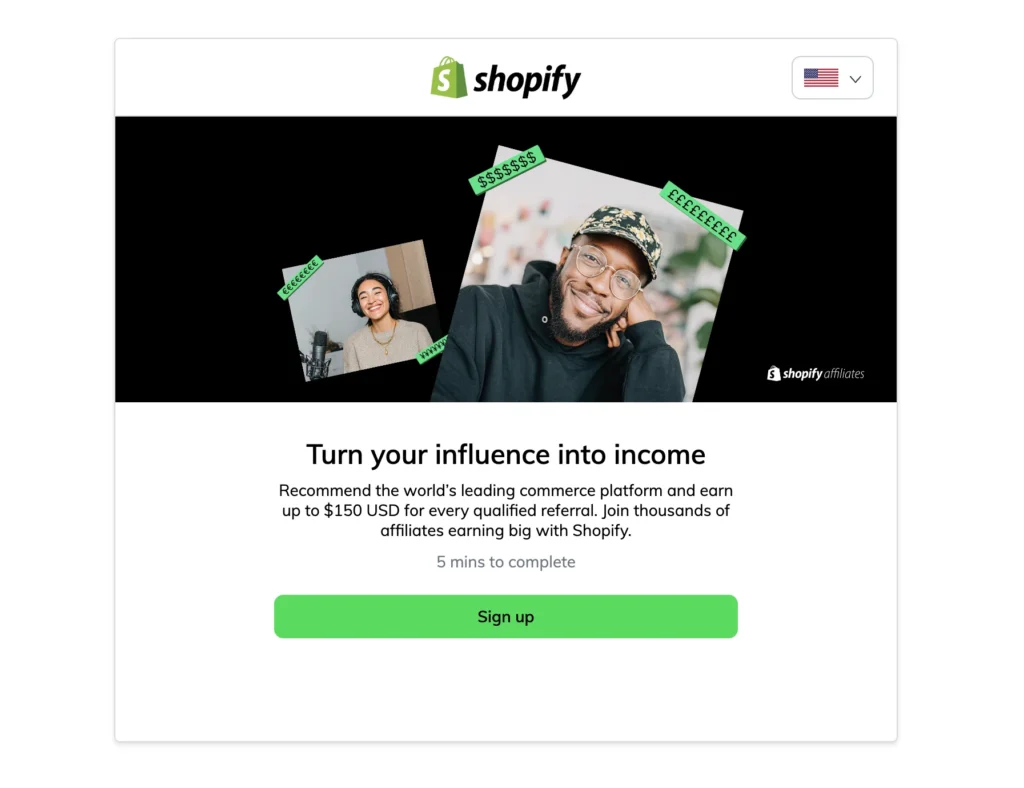
The Shopify affiliate program offers an opportunity to earn commissions by referring new merchants to Shopify, with payouts of up to $150 for eligible referrals. However, actual earnings depend on factors such as subscription plans, referral locations, and qualification rules. This guide explains how the program works, what affiliates can realistically earn, and how it compares with Shopify’s Partner Program. It also explores how Shopify merchants can create their own affiliate programs to attract more customers and grow sales.
What is the Shopify affiliate program?
The Shopify affiliate program is a referral program for creators, educators, bloggers, and publishers whose audience includes people who want to start or grow a business. You promote Shopify with a tracked link and earn a commission when a new merchant you refer signs up for an eligible plan. Shopify says the program is free to join and open to anyone with a merchant audience, but not every application is approved because it prioritizes quality and relevance.
The program runs on Impact, a third-party tracking platform. Through your Impact dashboard, you get referral links, text links, image assets, and performance reports. Shopify also describes a creative library, lead magnets, and a monthly newsletter for affiliates.
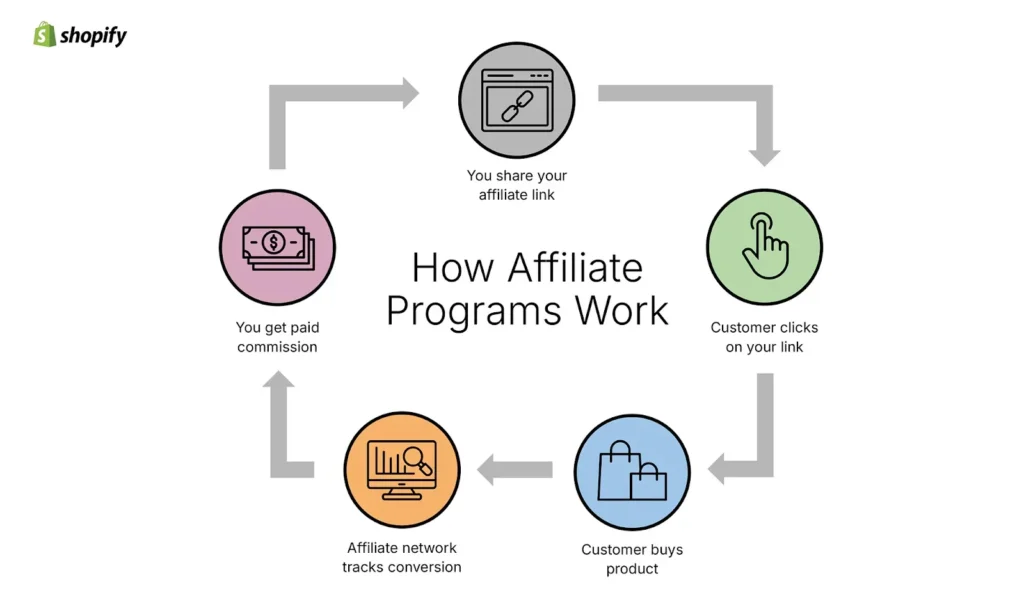
Shopify affiliate program commissions
| Item | Details |
|---|---|
| Commission | Up to $150 per qualified referral, paid once |
| What counts | A new merchant who pays for a full month of an eligible plan at full price |
| POS Pro | Up to $150 for each eligible Shopify POS Pro referral |
| Cap | No cap on the number of qualified referrals |
| Type | One-time bounty, not a recurring percentage |
The amount depends on where the referred merchant is located:
| Merchant location | Commission |
|---|---|
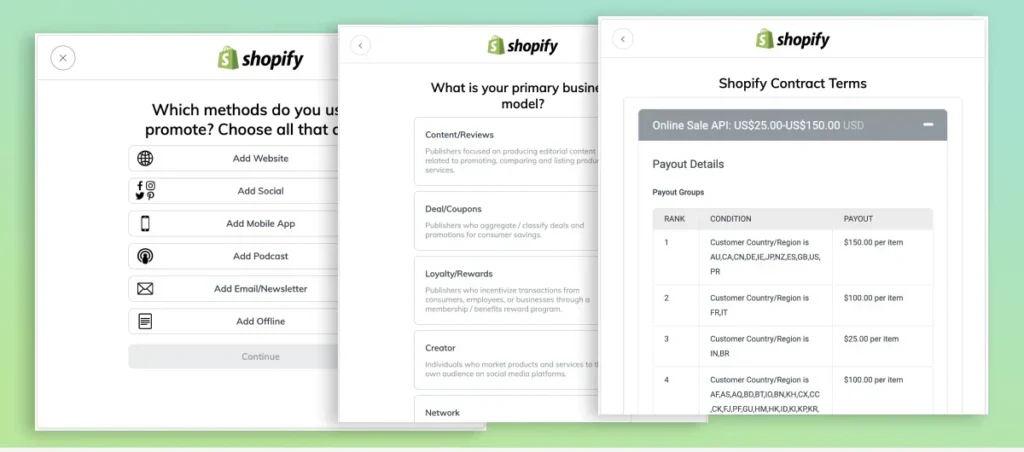
| United States, Canada, Australia, New Zealand, the UK, much of Europe, Japan, China, Hong Kong, and the Middle East | $150 |
| India, Africa, Latin America, much of Asia, and other listed markets | $25 |
The difference matters. A creator whose audience is mostly in India or Latin America earns one-sixth of what a creator with a US or UK audience earns for the same referral.
The 30-day cookie and free trials
Shopify tracks referrals with a 30-day cookie, which means the merchant has to sign up through your link within 30 days of clicking it. Shopify adds a longer tracking window for free trials: if the person starts a free trial within the tracking period, Shopify can keep following that store’s progress to a paid trial and a full-price plan for up to 400 days.
That matters because most merchants do not pay on day one. A reader who starts a Shopify free trial through your link in week two can still earn you a commission months later, as long as the store stays on the same tracked path and eventually pays for a full month. In practice, content that helps readers get through the trial, such as launch checklists and setup guides, tends to align better with this structure than content that only pushes signups.
Shopify affiliate program application process
- Visit Shopify’s affiliate program page and select Become an affiliate.
- Complete the free application with information about your website, audience, content, and how you plan to promote Shopify.
- Wait for Shopify to review the application; most applications are processed within five business days.
If approved, follow the instructions in your acceptance email to set up the program through Impact.
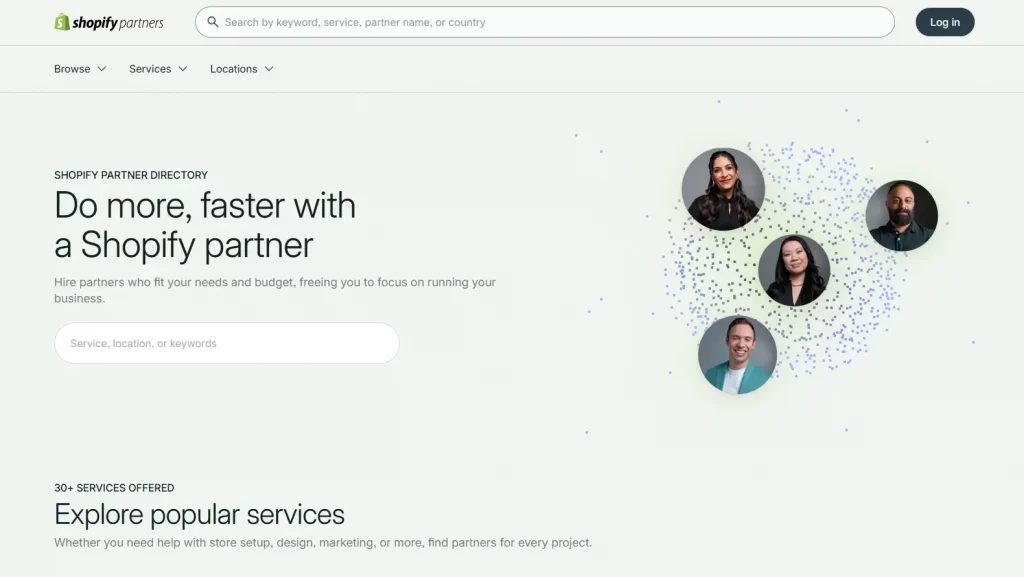
Shopify Affiliate Program vs Shopify Partner Program
People often confuse the two, but they serve different people:
| Affiliate Program | Partner Program | |
|---|---|---|
| Who it is for | Creators, bloggers, and publishers with an audience | Developers, agencies, and freelancers who build for merchants |
| How you refer | A tracked link | Building and transferring a store, or an approved referral |
| Commission | One-time, up to $150 per referral | A recurring share of the merchant’s subscription |
| Managed in | Impact | The Shopify Partner Dashboard |
Shopify’s Partner earnings page describes a recurring commission equal to 20% of the merchant’s monthly subscription fee for eligible store referrals, and its glossary refers to newer terms that include a share of eligible online sales volume over a fixed term.
Running an affiliate program Shopify merchants can use
The other meaning of the phrase is a program you run for your own store, where creators and customers earn a commission for sales they bring you. The mechanics are simple: affiliates apply, receive a tracked link or code, promote your products, and earn when a customer buys through them. Merchants usually run this with an app from the Shopify App Store, and the tools differ in pricing, so compare them before you commit.
The decision that matters most is the commission rate, and the way to judge it is as a share of gross profit, not revenue. The table below assumes a $60 order, a 40% gross margin ($24), and standard Basic card processing of 2.9% plus 30¢ ($2.04). These are illustrative assumptions.
| Commission rate | Commission on a $60 order | Share of gross profit | Profit left after processing and commission |
|---|---|---|---|
| 5% | $3.00 | 12.5% | $18.96 |
| 10% | $6.00 | 25% | $15.96 |
| 15% | $9.00 | 37.5% | $12.96 |
A 10% commission looks modest, but it hands a quarter of your gross profit to the affiliate. Test whether the sales it brings are truly additional, and set the rate based on your margin, not on what looks competitive. Common practice is a 30-day cookie, a longer one for expensive products, and a shorter one for impulse purchases, though the right number depends on your buying cycle.
Conclusion
The Shopify affiliate program is a good fit for creators whose audience is actively starting stores in high-commission countries, and a poor fit for anyone expecting passive income from a small or off-target audience. The one-time bounty, the eligible-plan rules, and the 30-day cookie with a long free-trial window should shape what you create. If you run your own store instead, treat commission as a share of gross profit and test before you scale.
For Shopify stores looking for a professional invoice solution that’s easy to customize without any coding, Vify Shopify Order Printer app is worth considering. Try it for free today and see how it fits your store’s needs.
FAQs
How much does the Shopify affiliate program pay?
It pays up to $150 once for each qualified referral, such as a new merchant who pays for a full month of an eligible plan. Referrals from the US, Canada, the UK, Australia, and many other markets earn $150, while referrals from India, Africa, Latin America, and other listed markets earn $25.
How long is the Shopify affiliate cookie?
The tracking window is 30 days from the click. If the referred person starts a free trial within that window, Shopify can keep tracking the store for up to 400 days until it converts to a paid plan.
How do I join the Shopify affiliate program?
Apply on Shopify’s affiliate page, which uses Impact to manage sign-up, links, and payments. The program is free to join, but not every application is approved.
When do Shopify affiliates get paid?
Commissions reach your Impact balance on the 22nd of the month after the referred merchant’s qualifying payment. You need a $10 minimum balance to withdraw, and payments go to a bank account or PayPal in USD.
Is the Shopify affiliate commission recurring?
No. The affiliate program pays a one-time commission per qualified referral. Shopify’s Partner Program is different and pays a recurring share for eligible store referrals.