
Your Shopify theme is the first thing a customer sees when they land on your store. Before they read a single product description or check a price, they’ve already made a gut decision about whether to trust you — and that decision is almost entirely driven by design. Choosing the right store design can make or break your first impression with customers — but that doesn’t mean you need to spend hundreds of dollars on a premium template. Today’s best free Shopify themes are fast, professional, mobile-optimized, and built to help new stores convert from day one. In this guide, we’ll explore the top-performing free Shopify themes for different industries and business types, helping you find the perfect design to launch your store with confidence and without extra costs.
What to look for in Free Shopify Themes
Not all free themes are created equal. Before you install the first one that catches your eye, it’s worth understanding what separates a great free theme from a mediocre one.
Page Speed and Core Web Vitals
Google uses Core Web Vitals — Largest Contentful Paint (LCP), Cumulative Layout Shift (CLS), and Interaction to Next Paint (INP) — as ranking signals. A slow theme doesn’t just frustrate customers; it actively impacts your SEO results. Look for themes built on Shopify’s Online Store 2.0 framework, which are optimized for performance out of the box.
Mobile Responsiveness
More than 70% of e-commerce traffic now comes from mobile devices. Your theme must look and function perfectly on a 375px smartphone screen, not just on a desktop monitor. All themes on the official Shopify Theme Store are mobile-responsive, but quality varies significantly — always preview on mobile before committing.
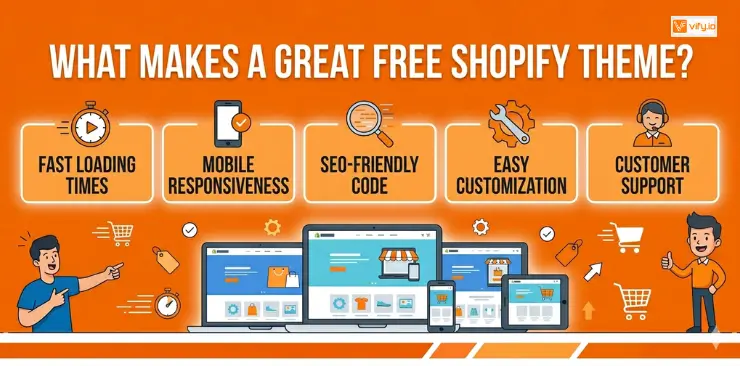
Built-in Sections and Customization Flexibility
Shopify introduced drag-and-drop sections and blocks that let you build pages without touching code. The best free Shopify themes offer a generous library of pre-built sections — hero banners, testimonials, featured collections, image galleries — so you can customize your store without hiring a developer.
App Compatibility
Most stores rely on third-party apps for reviews, upsells, email capture, or loyalty programs. A good theme integrates cleanly with popular apps without breaking your layout.
Design Style and Brand Fit
A theme designed for a minimalist skincare brand will feel wrong on a heavy-equipment retailer. Think about your product photography, your target customer, and the emotional tone of your brand before choosing a theme aesthetic.
The 12 Best Shopify Themes for Free
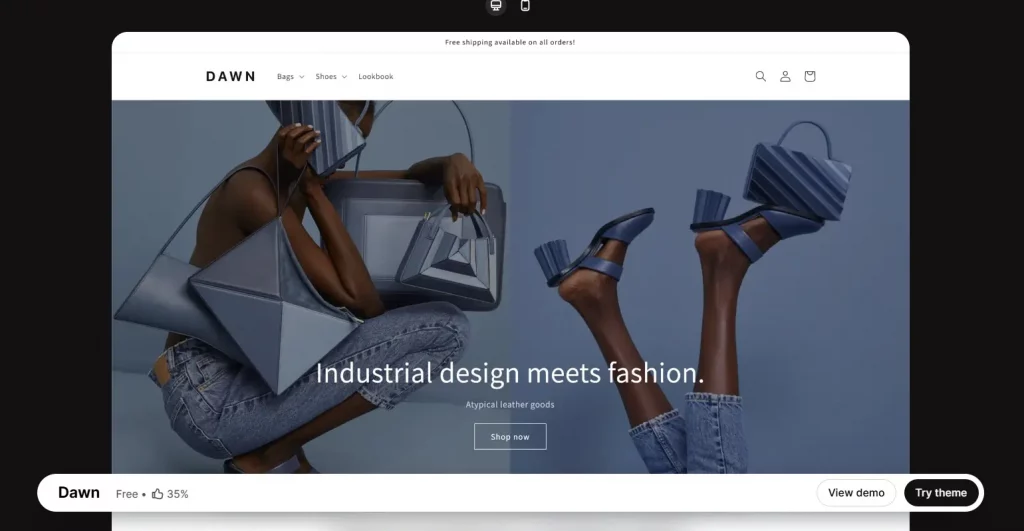
1. Dawn
Best for: Any store type; the go-to default for most new merchants.
Key features:
Clean, image-forward layout with generous whitespace
Sticky header and mega-menu navigation
Quick-add-to-cart and quick-view product tiles
Color scheme editor with live preview
Full Shopify OS 2.0 sections on all pages
Pros: Extremely versatile, lightning-fast load times, Shopify’s flagship free theme.
Cons: Very popular — your store will not look unique without customization.
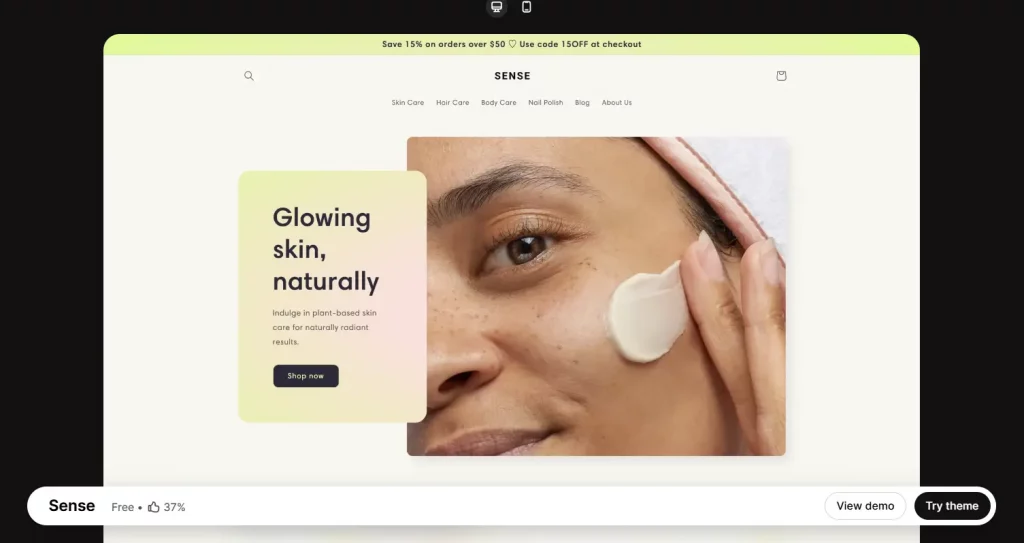
2. Sense
Best for: Skincare, cosmetics, supplements, wellness products.
Key features:
Soft pastel color palettes built in
Product ingredient/feature highlight sections
Sticky add-to-cart bar on product pages
Editorial-style homepage layouts
Trust badge and review sections
Pros: Beautiful out of the box for beauty niches, highly feminine aesthetic.
Cons: Less suited for tech, industrial, or masculine brand identities.
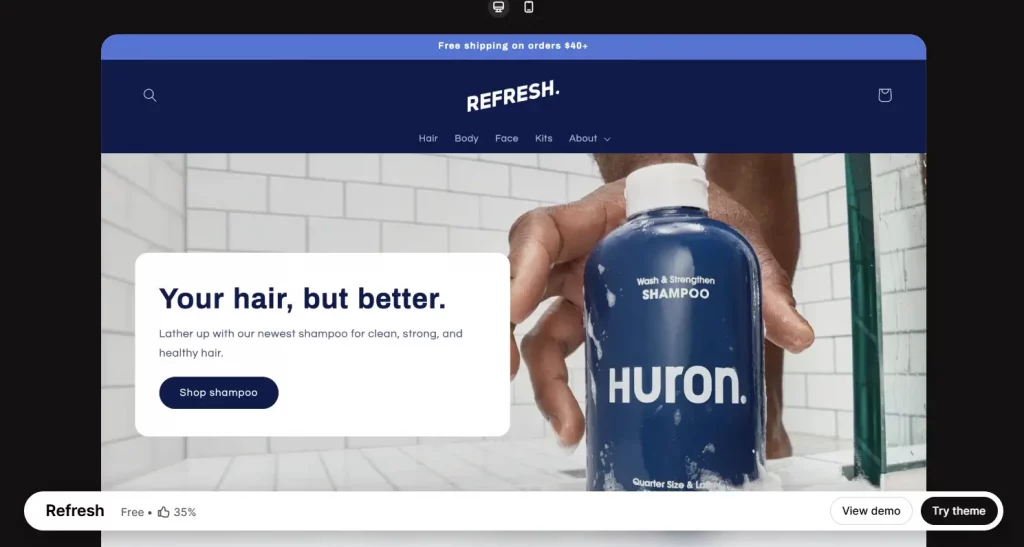
3. Refresh
Best for: Lifestyle brands, home goods, sustainable products.
Key features:
Bold typographic headers and generous padding
Featured collection with hover zoom effects
Multi-column menu support
Announcement bar with countdown timer
Optimized for large hero images
Pros: Timeless minimal look that ages well and loads quickly.
Cons: Requires high-quality photography to look its best.
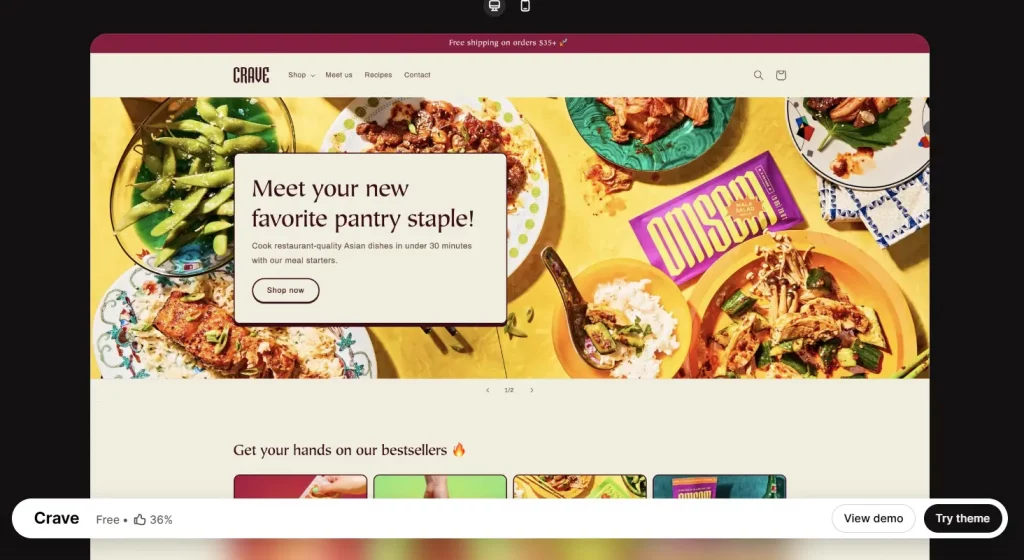
4. Crave
Best for: Food brands, packaged goods, meal kits, coffee, snacks.
Key features:
Warm, appetizing color palette options
Menu-style product list layouts
Featured recipe or blog section
Full-width banner sections for mouth-watering imagery
Instagram-style image grid for social proof
Pros: Instantly communicates warmth and appetite appeal.
Cons: Niche-specific — can feel out of place for non-food stores.
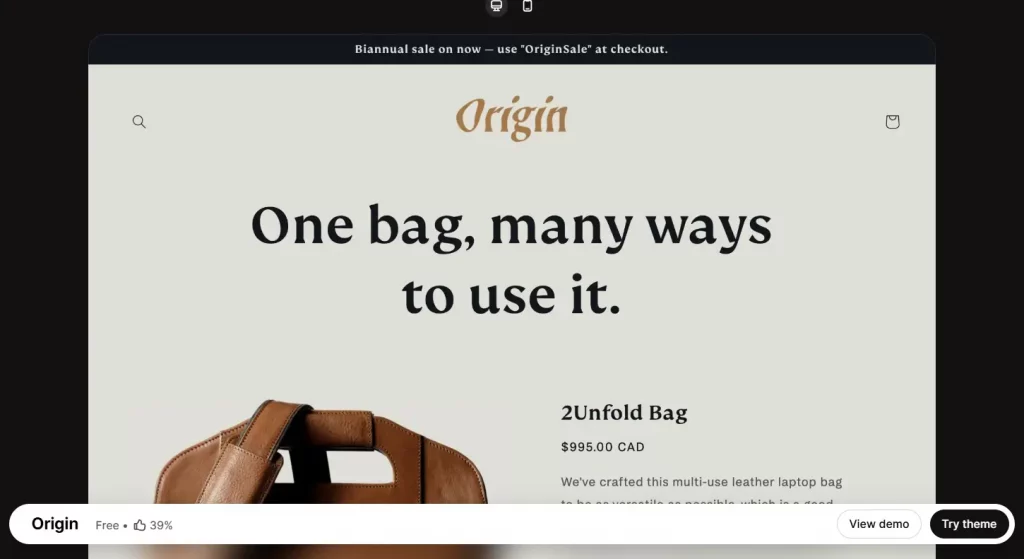
5. Origin
Best for: Handmade crafts, pottery, jewelry, art prints.
Key features:
Organic, earthy color schemes
Storytelling-focused homepage sections
Large product photography with minimal UI chrome
About/maker story section built in
Supports custom fonts
Pros: Feels human and authentic — perfect for creator-led brands.
Cons: Limited layout variations compared to Dawn.
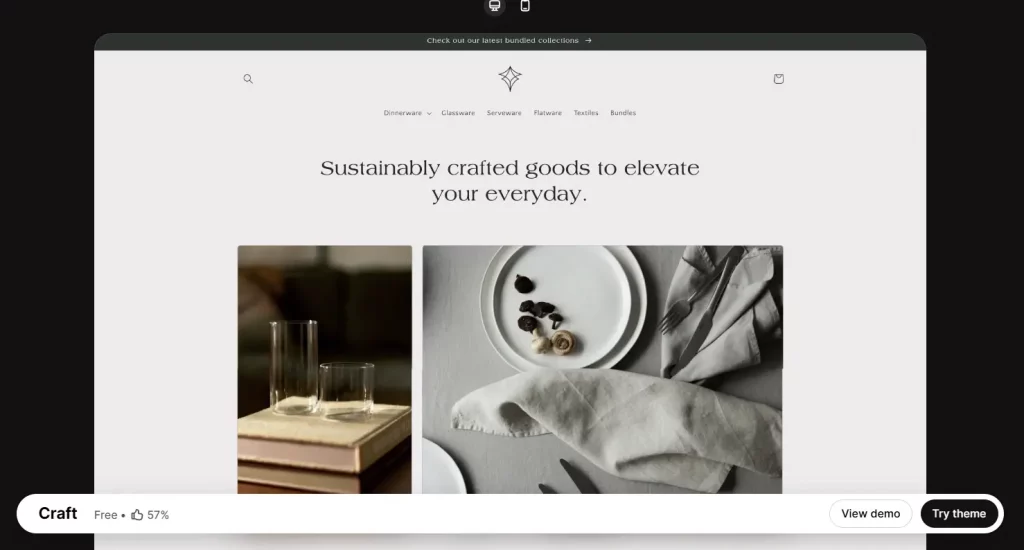
6. Craft
Best for: Boutique stores, limited-edition drops, single-product brands.
Key features:
Product-page-first layout philosophy
Large add-to-cart button and variant selectors
Trust signals (shipping, returns) near the buy button
Clean, editorial-style typography
Works well with 1–50 SKUs
Pros: Conversion-focused design reduces purchase friction.
Cons: Not ideal for large catalogs — navigation can feel limited.
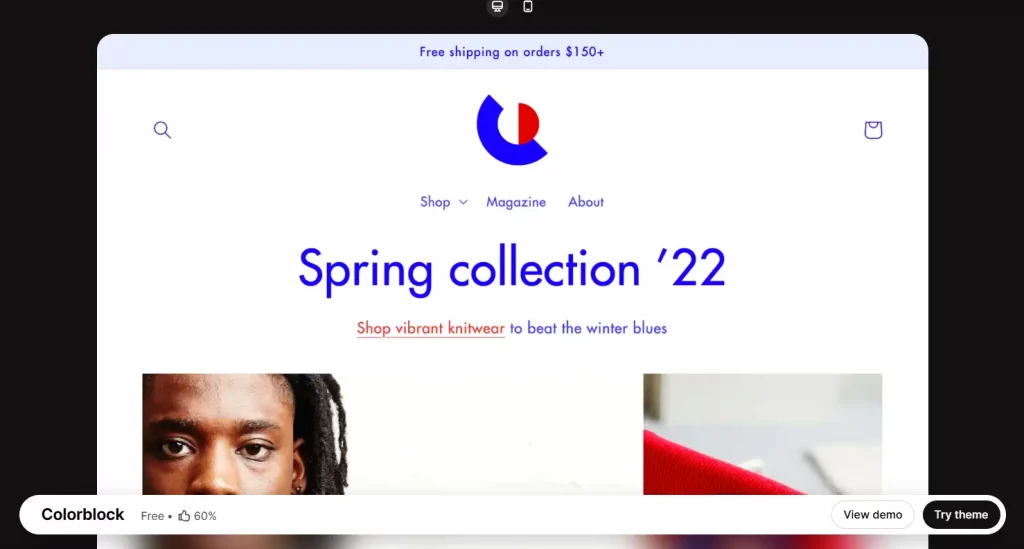
7. Colorblock
Best for: Streetwear, youth fashion, creative agencies, pop-up brands.
Key features:
Vibrant color-blocking layout sections
Oversized typography options
Horizontal scroll product collections
High-contrast UI designed for impact
Playful hover animations
Pros: Visually unforgettable — makes an immediate brand statement.
Cons: Not suitable for luxury or understated brands.
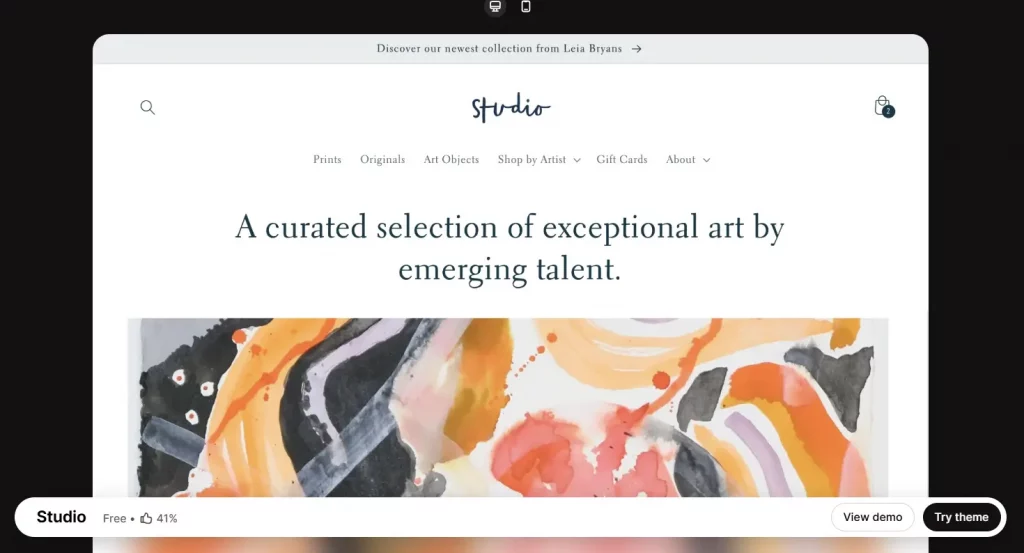
8. Studio
Best for: Photographers, artists, digital downloads, print-on-demand.
Key features:
Portfolio-style homepage grid layout
Full-screen image gallery sections
Minimal navigation to keep focus on visuals
Built-in video background support
Clean checkout flow
Pros: Let’s photography do the talking — extremely minimal chrome.
Cons: Needs strong visual assets; looks sparse without them.
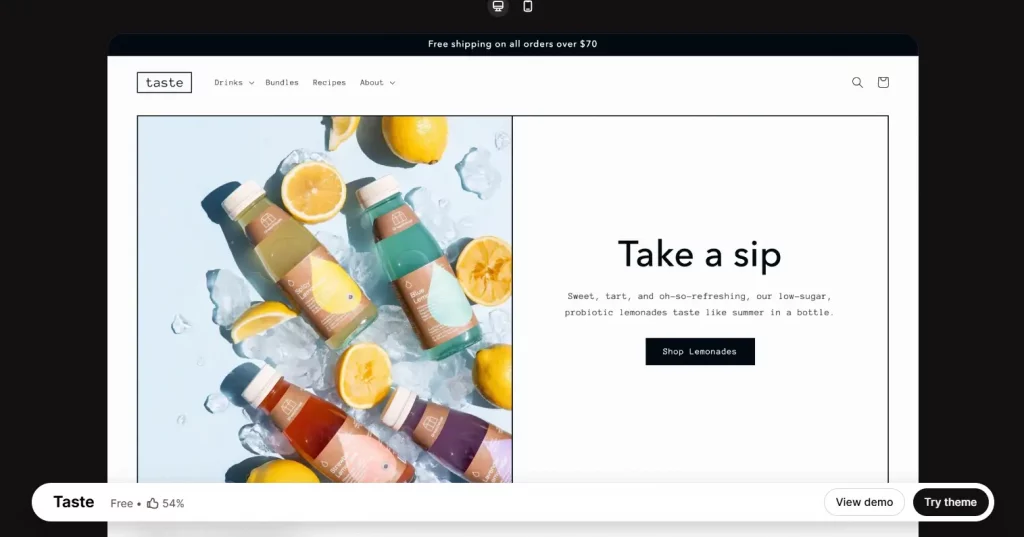
9. Taste
Best for: Wine, spirits, gourmet foods, specialty coffee, tea.
Key features:
Rich, dark color palette options
Feature callout sections for ingredients or provenance
Age verification gate built in
Full-width product storytelling layouts
Pairs well with subscription app integrations
Pros: Premium feel without a premium price tag.
Cons: Dark aesthetic does not suit all product categories.
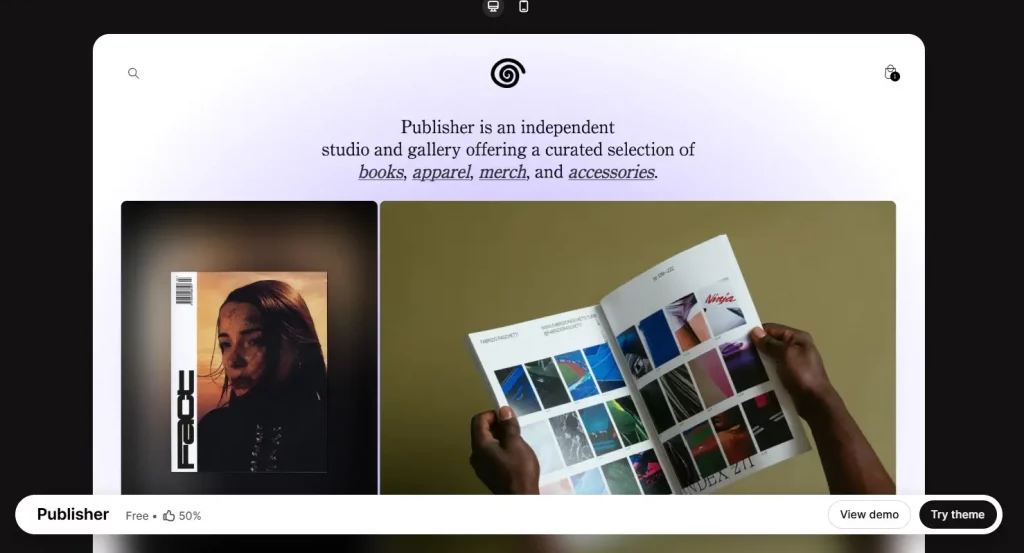
10. Publisher
Best for: Book stores, magazines, editorial brands, niche media.
Key features:
Blog-and-shop hybrid layout
Featured article sections on homepage
Readable typography optimized for long-form content
Category filter for large blog archives
Clean product pages with rich text support
Pros: One of the few free themes built for content-commerce hybrid stores.
Cons: Less suited for purely transactional product catalogs.
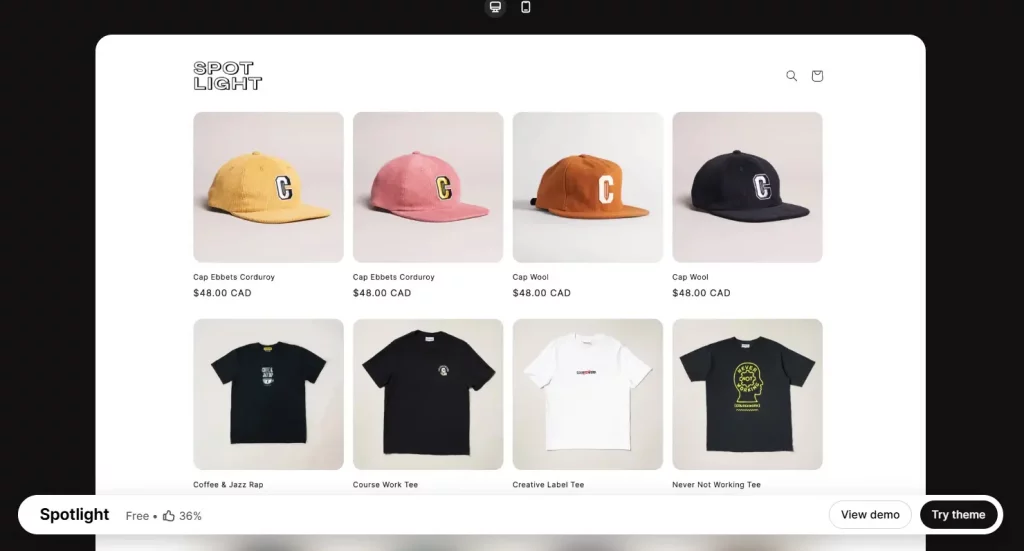
11. Spotlight
Best for: Launch pages, crowdfunding products, hero product stores.
Key features:
One-page-style scrolling experience
Feature callout and social proof sections
Bold countdown/urgency elements
Email capture section
Minimal navigation to reduce exit points
Pros: Purpose-built for conversion on a single product.
Cons: Difficult to scale to multi-product catalogs.
12. Ride
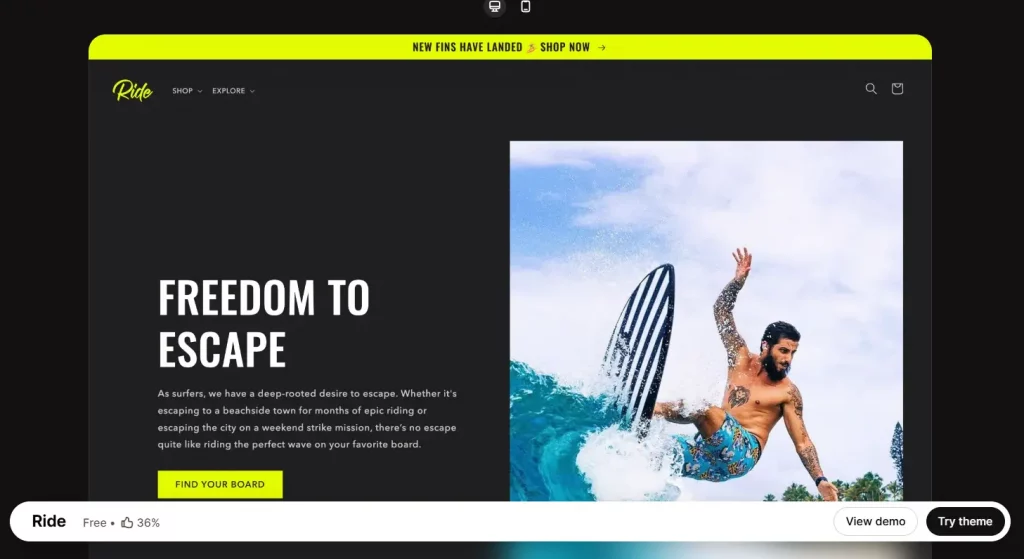
Best for: Cycling, outdoor gear, fitness equipment, activewear.
Key features:
Action-oriented hero sections with video support
Feature comparison sections for technical products
Dark, energetic color themes
Sticky navigation with active category tabs
Built for high-impact product photography
Pros: Communicates performance and energy immediately.
Cons: Niche-specific aesthetic limits versatility.
Free vs. Paid Shopify Themes
This is the question every new store owner asks, and the honest answer has shifted significantly over the past few years: free themes are now genuinely excellent for the vast majority of stores.
How Free Themes Have Improved
Shopify’s investment in its 2.0 platform lifted the quality floor across the board. Dawn, for example, scores better on Core Web Vitals than many premium themes that cost $300+. Shopify’s free themes are also officially maintained, meaning they receive updates when Shopify changes its platform — something that isn’t always true of third-party paid themes.
When a Paid Theme Makes Sense
There are scenarios where upgrading to a paid theme ($100–$500 one-time purchase) is justified:
Large product catalogs with advanced filtering needs (color, size, price range, multiple attributes simultaneously)
Subscription-based businesses that need deep integration with apps like Recharge
High-volume stores where a 0.1-second speed improvement translates to measurable revenue
Brands that need very specific design functionality not available in free themes — mega menus, infinite scroll, advanced cart drawers
Conclusion
The best free Shopify themes are the ones that match your brand, support your growth goals, and deliver a smooth shopping experience from day one. Whether you’re launching a fashion store, a beauty brand, or a niche product business, choosing the right design can improve trust, user experience, and conversions without increasing your startup costs. While premium templates offer additional flexibility for advanced stores, many merchants can build a highly professional storefront by choosing a free best theme for Shopify. Start with a theme that fits your business today, then optimize and customize as your store grows.
If you’re selling on Shopify and need a professional invoice solution, especially one that’s easy to customize without any coding skills, then Vify’s Order Printer app Shopify is the best choice for you. Try it for free today and experience it for yourself. We’re confident you’ll love it.