
Shopify powers millions of ecommerce stores worldwide and remains one of the most popular platforms for launching an online business. However, subscription fees, app expenses, and customization requirements can lead some merchants to consider other options as their needs evolve. Several strong Shopify’s competitors now offer compelling alternatives, each with its own advantages in pricing, ease of use, or advanced ecommerce features. This guide takes a closer look at the top Shopify alternatives to help you choose the platform that best matches your growth plans.
The 5 best Shopify alternatives
1. WooCommerce
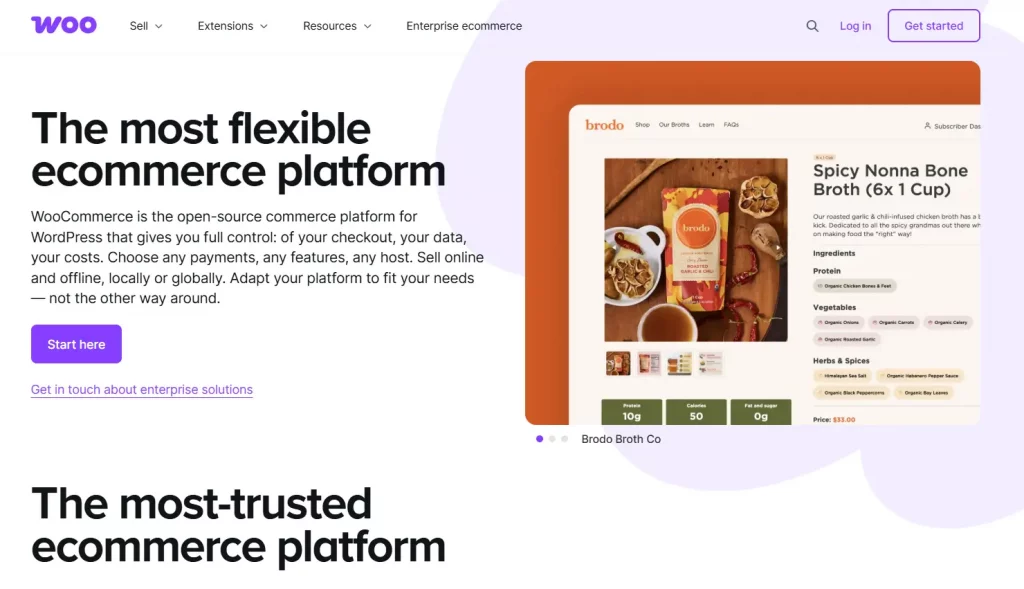
WooCommerce is a free, open-source ecommerce plugin that transforms a WordPress website into a fully operational online store. This fundamental architecture difference is what sets it apart from many Shopify alternatives. Instead of relying on a hosted platform, you retain complete ownership of your website, data, and infrastructure. There are no platform-imposed transaction fees, mandatory payment providers, or restrictions on customization. The trade-off is that store management, security, performance, and maintenance become your responsibility, either personally or through a developer or agency.
The WooCommerce plugin itself is free and includes essential ecommerce functionality such as unlimited products, unlimited orders, and API access. Unlike some ecommerce platforms, core selling features are not locked behind higher-tier subscriptions. However, while the software costs nothing to install, running a professional ecommerce store still requires several additional investments.
| Cost Component | Typical Annual Cost |
|---|---|
| Managed WordPress/WooCommerce Hosting | $240–$3,600 |
| Premium Theme (Optional) | $49–$150 |
| Premium Plugins & Extensions | $400–$650 |
| SSL Certificate | Usually Included |
| Estimated First-Year Cost | $1,800–$3,000+ for standard stores; $10,000+ for complex builds |
This is often overlooked in comparisons between WooCommerce and other Shopify alternative platforms. While WooCommerce is frequently marketed as “free,” the total cost of ownership can be surprisingly similar to a Shopify subscription once hosting, premium extensions, and ongoing maintenance are factored in. For smaller and mid-sized businesses, these expenses can narrow the cost gap considerably.
WooCommerce is generally a strong fit for businesses already operating on WordPress, companies with access to technical resources, or merchants who prioritize ownership and customization over simplicity. On the other hand, entrepreneurs looking for a quick, low-maintenance launch may find the learning curve and ongoing management requirements more demanding than expected.
Store migration is another important consideration. Moving from Shopify to WooCommerce typically involves exporting products, customer records, and order data, rebuilding the storefront design because Shopify’s Liquid themes cannot be transferred, and replacing existing Shopify apps with WordPress-compatible alternatives. Depending on catalog size, integrations, and customization requirements, migration projects often take several weeks to complete, making the transition more involved than switching between two fully hosted ecommerce platforms.
2. BigCommerce
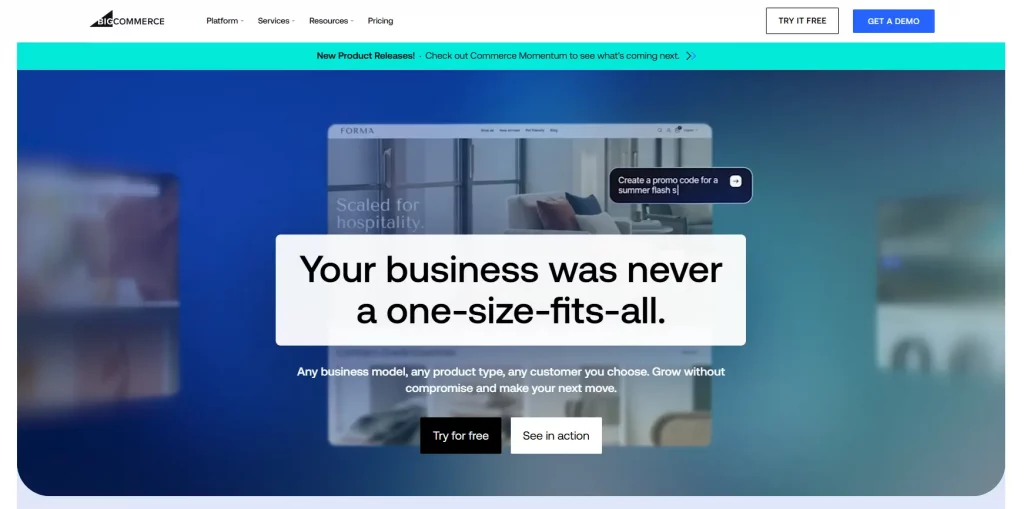
BigCommerce has long positioned itself as a platform built for growing businesses, particularly merchants with more advanced operational requirements. Unlike many Shopify alternatives, it includes a wide range of ecommerce features natively, reducing the need for additional apps and integrations. Even on lower-tier plans, merchants receive access to unlimited products, unlimited staff accounts, and built-in B2B capabilities such as customer-specific pricing, quote requests, and net payment terms—features that often require third-party solutions on Shopify.
In June 2026, BigCommerce introduced a major pricing update that affected both plan structure and fee policies. The company renamed its plans while also adjusting the revenue thresholds that determine when merchants must move to a higher tier. As a result, businesses may now reach upgrade limits sooner than under the previous pricing model.
| Plan | Monthly Price (Annual Billing) | Revenue Threshold Before Upgrade |
|---|---|---|
| Core | $29/month | $30,000/year |
| Growth | $79/month | $100,000/year |
| Scale | $299/month | $33,333/month |
| Performance | Custom Pricing | No fixed limit |
Another significant change was the introduction of the Open Payment Provider Fee. Merchants using payment gateways outside BigCommerce’s approved provider list may incur additional charges ranging from 0.6% to 2%, depending on their plan. Approved providers currently include major payment solutions such as Stripe, PayPal/Braintree, and Adyen.
Despite the pricing changes, BigCommerce continues to stand out because of the breadth of functionality included out of the box. Features such as customer-specific pricing catalogs, quotation workflows, multi-storefront management, and support for more than 100 currencies are available without requiring an enterprise-level contract or a large collection of third-party apps.
For merchants evaluating Shopify alternatives with strong B2B capabilities, BigCommerce remains one of the most compelling options available. Businesses that sell both wholesale and direct-to-consumer products often find that the platform’s built-in tools can replace multiple paid apps, helping offset additional platform fees while simplifying day-to-day operations.
3. Wix eCommerce
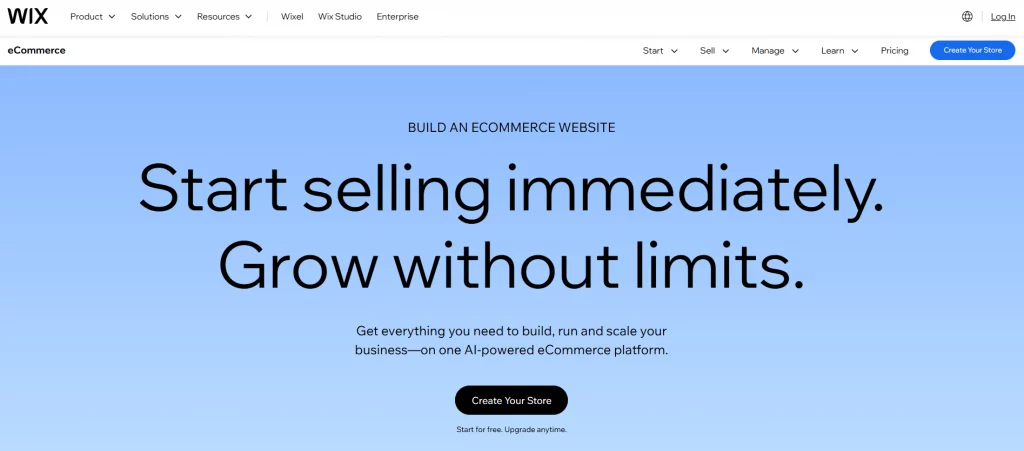
Wix significantly revamped its pricing structure in 2025, replacing its previous plan lineup with four streamlined options: Light, Core, Business, and Business Elite. For merchants looking to sell online, the Core plan serves as the true entry point, as ecommerce functionality is not available on the lower-tier Light plan.
One of the biggest differentiators between Wix and many ecommerce platforms is the growing role of AI throughout the store-building process. Wix can automatically generate page layouts, draft product descriptions, and recommend SEO elements based on a brief business description. For entrepreneurs with limited technical experience, these tools can dramatically reduce setup time and simplify the launch process.
However, some limitations become more apparent as a business expands. Essential features such as automated sales tax calculation and advanced shipping configurations are not included in the Core plan and require an upgrade to the Business tier. Even then, automated tax calculations are subject to monthly transaction limits, which may create additional operational work for higher-volume stores.
Unlike some ecommerce platforms, Wix does not charge platform-level transaction fees on its ecommerce plans. Merchants are only responsible for standard payment processing costs through supported gateways, making pricing relatively straightforward. This can make Wix an attractive alternative Shopify option for small businesses looking to avoid additional platform fees while maintaining predictable operating costs.
4. Squarespace Commerce
Squarespace has never tried to compete on the sheer number of ecommerce features available. Instead, its strongest selling point has always been design quality. The platform is particularly well known for professionally crafted templates that help businesses create visually polished websites without requiring extensive customization.
Following a plan restructure in late 2025, Squarespace now offers four primary tiers: Basic, Core, Plus, and Advanced. While the design capabilities remain largely consistent across all plans, the differences lie in ecommerce functionality, transaction fees, and selling tools.
| Plan | Annual Billing Price | Transaction Fee on Physical Products | Best For |
|---|---|---|---|
| Basic | $16/month | 2% | Portfolio websites with occasional sales |
| Core | $23/month | 0% | Small businesses launching ecommerce |
| Plus | $39/month | 0% (1% on digital products) | Growing stores needing additional selling tools |
| Advanced | $99/month | 0% | Established digital product businesses |
Compared with larger ecommerce-focused platforms, Squarespace offers a more streamlined feature set. Capabilities such as multi-location inventory management, advanced fulfillment workflows, and wholesale selling tools are either limited or unavailable. Where Squarespace excels is brand presentation. For businesses in industries where visual appeal plays a major role in purchasing decisions—such as boutique fashion, creative services, home decor, photography, or hospitality-related retail—the platform’s design-first approach can be a significant advantage.

5. PrestaShop
PrestaShop offers a compelling advantage. Unlike many ecommerce solutions that rely heavily on paid extensions for global selling, PrestaShop includes multi-language and multi-currency functionality as part of its core platform. This allows businesses to serve customers across different regions without depending on multiple third-party localization apps.
PrestaShop is available in two deployment models. The first is PrestaShop Classic, a free, open-source version that gives merchants complete control over hosting, customization, and platform management. Similar to WooCommerce, businesses are responsible for maintaining their own infrastructure, with hosting costs typically ranging from a few dollars per month for smaller stores to significantly more for high-traffic websites.
The second option is PrestaShop Hosted, which removes much of the technical complexity by providing managed hosting, installation, and support as part of a monthly subscription. For businesses that want the flexibility of PrestaShop without handling server management themselves, this hosted model can provide a useful middle ground. Larger organizations also have access to enterprise-level plans designed for more demanding ecommerce operations.
For businesses operating across multiple countries, these capabilities can simplify international expansion. A merchant selling to customers in different regions can manage localized URLs, currencies, languages, and tax configurations from a single backend environment. Achieving a similar setup on many hosted ecommerce platforms often requires additional apps and ongoing subscription costs.

Conclusion
Choosing the right ecommerce platform ultimately comes down to your business goals, budget, technical resources, and long-term growth plans. Each of the leading Shopify alternatives offers distinct advantages: WooCommerce provides maximum flexibility and ownership, BigCommerce stands out for built-in B2B capabilities, Wix and Squarespace prioritize ease of use and design, while PrestaShop excels in international commerce.
Before making a decision, evaluate not only the upfront costs but also the features, scalability, and ongoing maintenance requirements that will impact your business over time. And if, after comparing the available options, you decide that Shopify remains the best fit for your store, having the right supporting tools is equally important. For merchants looking to create professional invoices and order documents, Vify Shopify Order Printer app is the best choice. Try it for free today, we’re confident you’ll love it.