
Shopify remains one of the most trusted names in ecommerce, but it is not the only option. As subscription costs rise, app expenses stack up, and business needs evolve, more store owners are actively researching Shopify competitors that better match their budget, feature requirements, or growth stage. This guide breaks down 7 of the top Shopify competitors, comparing pricing, standout features, and the type of business each platform serves best; so you can make a confident, informed decision.
The 7 top Shopify competitors
Below are the top competitors of Shopify, each offering different strengths depending on your business size, budget, and technical requirements.
1. WooCommerce
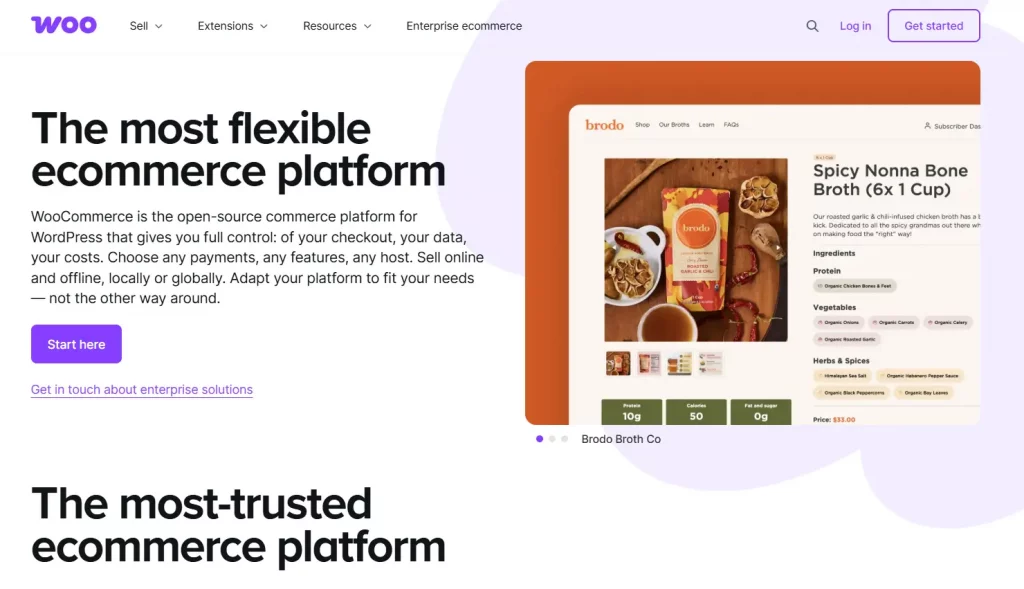
WooCommerce turns a WordPress site into a fully functional online store through a free, open-source plugin. Unlike hosted platforms, it gives merchants complete control over their website, data, and infrastructure — with no platform-imposed transaction fees or mandatory payment providers.
Pricing snapshot: The plugin itself is free, but running a professional store typically costs $1,800–$3,000+ in the first year once hosting, a premium theme, and essential extensions are factored in. Complex builds can run $10,000 or more.
Standout features: Unlimited products and orders even on the free plugin, full API access, and an enormous library of WordPress plugins for SEO, marketing, and design.
Best for: Businesses already on WordPress, merchants with access to a developer, or anyone who values ownership and customization over a fully managed experience.
Drawback: Store management, security, and performance become your responsibility (or your developer), and migrating away from Shopify means rebuilding the storefront design from scratch, since Shopify’s Liquid themes don’t transfer.
2. BigCommerce
BigCommerce has built its reputation around merchants with more advanced operational needs, making it one of the strongest Shopify top competitors for businesses that need built-in B2B capabilities instead of relying heavily on third-party apps.
Pricing snapshot: Following a 2026 pricing restructuring, plans run Core ($29/month, up to $30,000/year in revenue), Growth ($79/month, up to $100,000/year), and Scale ($299/month, up to $33,333/month), with custom Enterprise pricing above that. BigCommerce also introduced an Open Payment Provider Fee of 0.6%–2% for merchants using payment gateways outside its approved list.
Standout features: Customer-specific pricing catalogs, quote workflows, multi-storefront management, and support for more than 100 currencies — all included natively, even on lower-tier plans.
Best for: Merchants selling both wholesale and direct-to-consumer who want B2B tools without a large stack of paid apps.
Drawback: Revenue thresholds mean fast-growing stores may hit an upgrade limit sooner than expected under the new pricing model.
3. Wix eCommerce
Wix significantly revamped its pricing structure in 2025, replacing its previous plan lineup with four streamlined options: Light, Core, Business, and Business Elite. For merchants looking to sell online, the Core plan is the true entry point, since ecommerce functionality is not available on the lower-tier Light plan.
Pricing snapshot: No platform-level transaction fees on ecommerce plans; merchants pay only standard payment processing costs.
Standout features: Wix leans heavily into AI throughout the store-building process, automatically generating page layouts, drafting product descriptions, and suggesting SEO elements from a simple business description — a major time-saver for non-technical founders.
Best for: Entrepreneurs with limited technical experience who want a fast, guided setup.
Drawback: Automated sales tax calculation and advanced shipping configuration require an upgrade to the Business tier, and even then, tax automation is capped by monthly transaction limits.
4. Squarespace Commerce
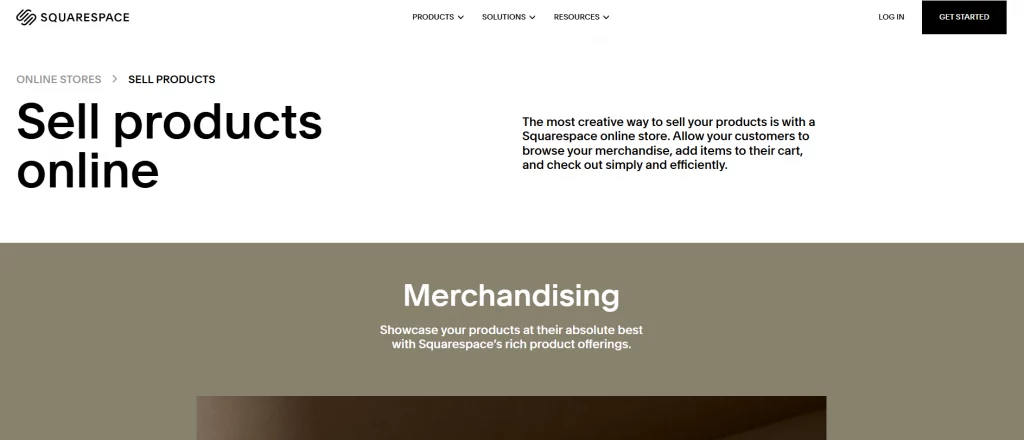
Squarespace has never tried to compete on the sheer number of ecommerce features available. Instead, its strongest selling point has always been design quality. The platform is particularly well known for professionally crafted templates that help businesses create visually polished websites without requiring extensive customization.
Pricing snapshot: Following a late-2025 restructuring, plans run Basic ($16/month, 2% transaction fee), Core ($23/month, 0% fee), Plus ($39/month, 0% on physical products), and Advanced ($99/month, 0% fee).
Standout features: Best-in-class visual templates that require minimal customization to look professional, making it a strong option for visually driven brands.
Best for: Boutique fashion, creative services, home decor, photography, and hospitality-related retail.
Drawback: Multi-location inventory management, advanced fulfillment workflows, and wholesale selling tools are limited or unavailable compared with more feature-dense platforms.
5. PrestaShop
PrestaShop offers a compelling advantage. Unlike many ecommerce solutions that rely heavily on paid extensions for global selling, PrestaShop includes multi-language and multi-currency functionality as part of its core platform. This allows businesses to serve customers across different regions without depending on multiple third-party localization apps.
Pricing snapshot: PrestaShop Classic is free and open-source, with hosting costs ranging from a few dollars a month for small stores to significantly more at scale. PrestaShop Hosted adds managed hosting and support as part of a monthly subscription, with enterprise-level plans available for larger operations.
Standout features: Manage localized URLs, currencies, languages, and tax configurations from a single backend — a setup that typically requires multiple apps and subscriptions on other hosted platforms.
Best for: Businesses actively expanding into multiple countries or regions.
Drawback: The free Classic version requires the same level of infrastructure responsibility as WooCommerce — hosting, security, and maintenance fall on the merchant or their agency.

6. Adobe Commerce
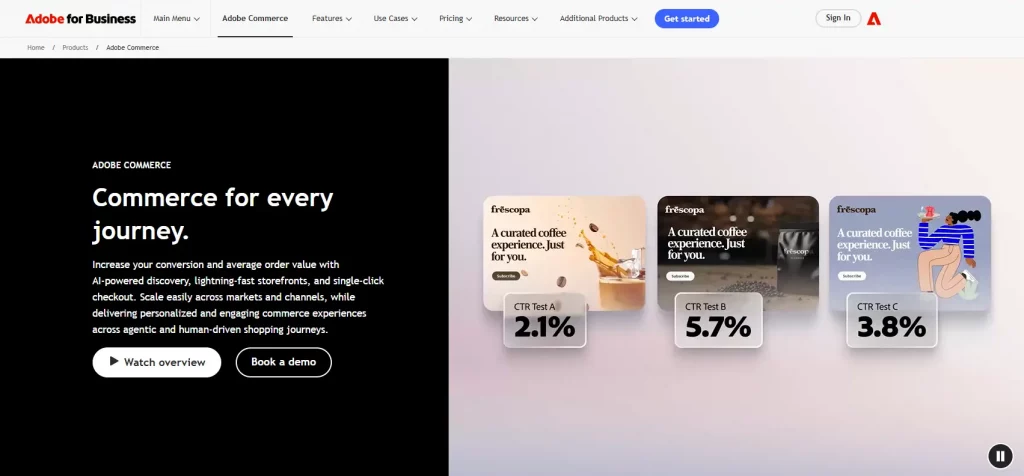
Adobe Commerce (formerly Magento Commerce) is built for large brands with complex catalogs, multi-region, and B2B requirements.
Pricing snapshot: Adobe doesn’t publish standard pricing; licensing is based on Gross Merchandise Value (GMV). Industry estimates for 2026 place Adobe Commerce licensing at roughly $22,000 to $125,000+ per year for the on-premises edition.
Standout features: Support for massive product catalogs, deep B2B workflows including company accounts and approval chains, and near-total control over storefront and backend logic.
Best for: Enterprise brands with dedicated development resources and complex, high-GMV operations.
Drawback: Total cost of ownership extends well beyond the license fee — development, extensions, and ongoing maintenance often add tens of millions of dollars annually, making it one of the most expensive Shopify competitors to run.
7. Ecwid by Lightspeed
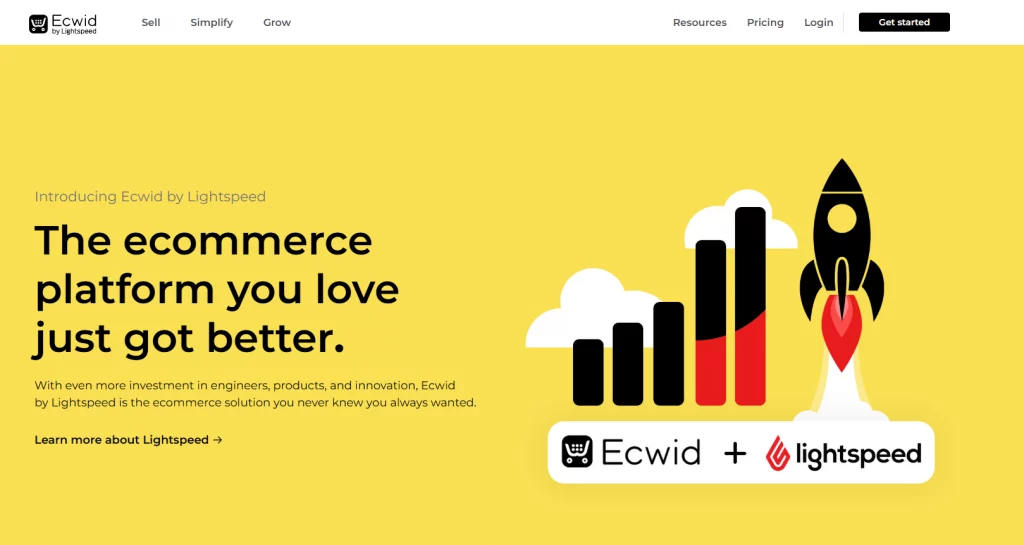
Ecwid takes a different approach entirely: instead of replacing your website, it embeds a fully functional store into an existing site, blog, or social media page through a simple code snippet.
Pricing snapshot: Plans run Starter (around $5/month, up to 10 products), Venture (around $25/month, 100 products), Business (around $49/month, 2,500 products), and Unlimited (around $119/month, unlimited products and staff accounts), with roughly 16% savings on annual billing. Ecwid charges zero platform transaction fees on every tier.
Standout features: Multi-channel selling across your website, Facebook, Instagram, and marketplaces from one dashboard, plus support for 53 languages.
Best for: Creators and small businesses that already have a website they like and simply want to add selling capability without rebuilding it.
Drawback: Design customization is more limited than standalone platforms, and the app ecosystem is smaller than Shopify’s.
Conclusion
While Shopify continues to be one of the most popular ecommerce platforms, it isn’t the ideal choice for every business. The best Shopify competitors each bring different strengths, from greater customization and built-in B2B tools to lower operating costs or stronger international capabilities. By comparing the leading competitors for Shopify, you can choose a platform that better supports your current needs and future growth. The right decision ultimately depends on your budget, technical resources, and the features that matter most to your business.
Before making a decision, evaluate not only the upfront costs but also the features, scalability, and ongoing maintenance requirements that will impact your business over time. And if, after comparing the available options, you decide that Shopify remains the best fit for your store, having the right supporting tools is equally important. For merchants looking to create professional invoices and order documents, Vify Shopify Order Printer app is the best choice. Try it for free today, we’re confident you’ll love it!