When your team is focused on daily operations and client interactions, invoicing can easily become an overlooked yet critical part of running a business. To maintain healthy and consistent cash flow, businesses must ensure that invoices are issued correctly and payments are collected on time. Throughout the lifecycle of a project, various factors—such as payment schedules, industry standards, legal compliance, regional regulations, and project scope—can require different types of invoices. Knowing which invoice to use and when to send it is essential for efficient financial management. This article explores 15 common types of invoices, explains their purposes, and provides practical examples to help you choose the right invoice for each situation and get paid faster.
Invoices for One-Time Transactions
These invoice types are typically used for straightforward sales between a buyer and a seller or service provider.
1. Proforma Invoice
A proforma invoice is a preliminary document sent before goods or services are delivered. It outlines estimated costs, delivery timelines, and other relevant details. Buyers review this invoice to approve pricing and scope before work begins.
Example: Zylker Bottles receives an order for 500 plastic bottles priced at $8 each. They issue a proforma invoice totaling $4,000, including delivery details and applicable taxes. The buyer reviews the document and approves production.
2. Sales Invoice (Standard Invoice)
This is the most familiar type of invoice, issued to request payment after goods or services are provided. It includes seller and buyer details, itemized charges, payment terms, and payment methods. Once paid, it serves as an official transaction record.
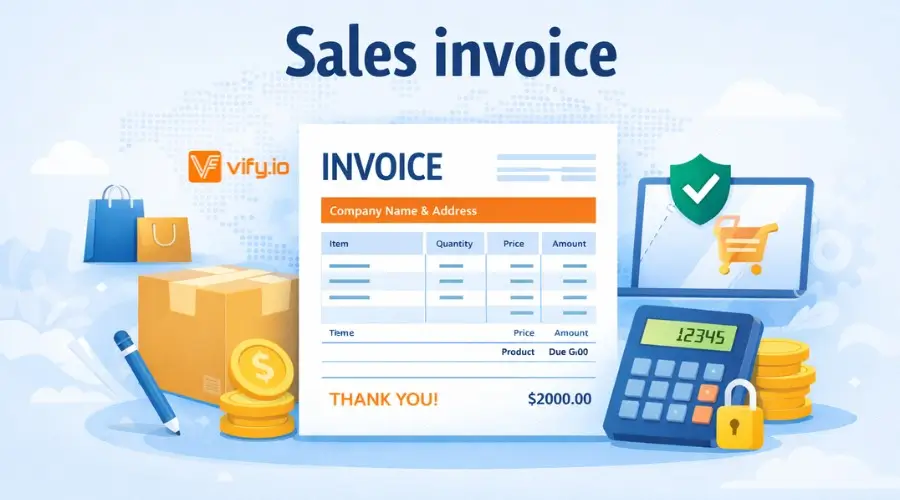
Example: After completing the production of 500 plastic bottles, Zylker Bottles sends a sales invoice to collect payment before shipping the goods.
3. Overdue Invoice
An invoice becomes overdue when payment is not received by the specified due date. Sellers may follow up with reminders, apply late fees, or take further action.
Example: Zylker Bottles sets a 30-day payment term. If payment is still outstanding five days after the due date, they issue an overdue invoice and notify the buyer of a 5% late fee.
4. Consolidated Invoice
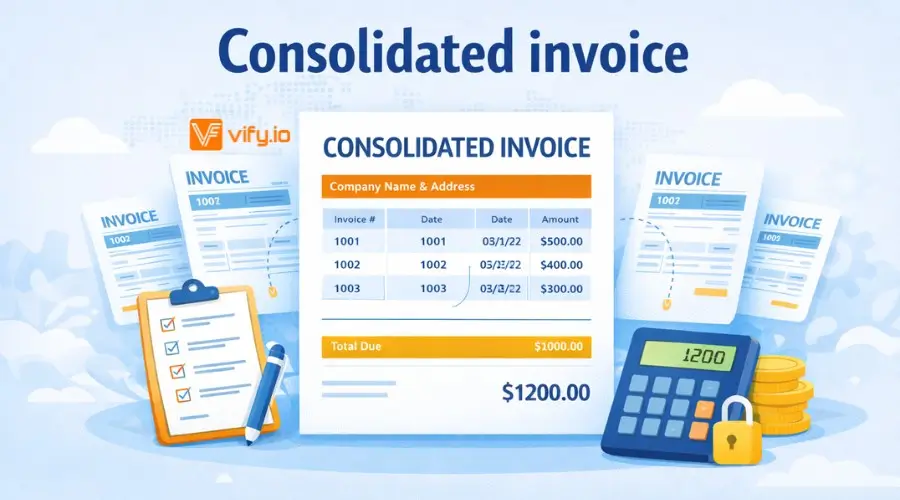
A consolidated invoice combines multiple outstanding invoices for the same customer into one document, simplifying the payment process.
Example: If the same buyer orders 500 plastic bottles and later 200 metal bottles, Zylker Bottles can issue a single consolidated invoice covering both orders.
Invoices Used in Project-Based Work
Projects often require phased or advance billing, making these invoice types more suitable.
5. Retainer Invoice
A retainer invoice collects an upfront payment to secure services for future use. It is commonly used to cover initial costs or protect against cancellations.
Example: Zylker Notaries requests an advance retainer from a client, deducting fees from the balance each time legal services are provided.
6. Interim Invoice
Interim invoices request partial payments at different stages of a project, helping fund ongoing work and reduce financial risk.
Example: Zylker Constructions bills 25% of the total project cost after completing the foundation of a 20-story building.
7. Timesheet Invoice
This invoice is based on the number of hours worked and is commonly used by consultants, freelancers, and service providers.
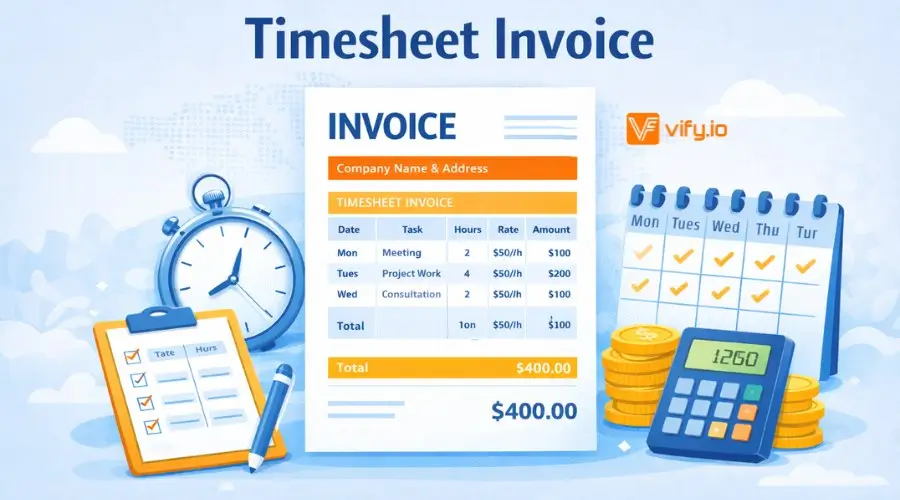
Example: Zylker Designs charges $25 per hour. A 10-hour project results in a $250 timesheet invoice.
8. Final Invoice
Issued at the end of a project, the final invoice reflects the total amount due after subtracting any retainers or interim payments.
Example: For a $10,000 construction project with $2,500 already paid, Zylker Constructions issues a final invoice for $7,500.
Invoice Memos for Adjustments
These invoices correct or adjust previous transactions rather than request new payments.
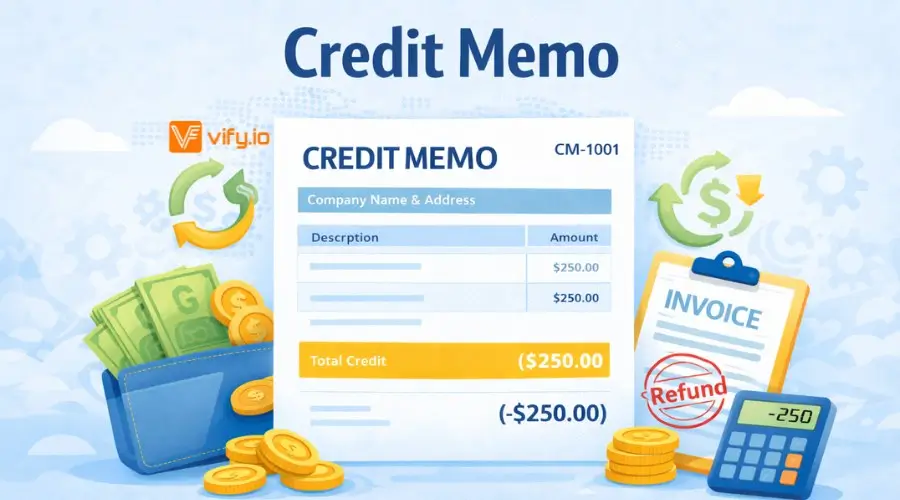
9. Credit Memo
A credit memo is issued when the seller owes money to the buyer due to returns, discounts, or errors.
Example: If 25 out of 500 bottles are damaged, Zylker Bottles issues a $200 credit memo for future purchases.
10. Debit Memo
A debit memo increases the amount owed by the buyer due to additional charges or corrections.
Example: Zylker Bottles applies an unexpected 8% surcharge and issues a debit memo for $320.
11. Mixed Invoice
A mixed invoice includes both credits and debits, showing the net balance owed.
Example: After applying a $200 credit and a $320 debit, the buyer owes $120, which is shown on a mixed invoice.
Other Common Invoice Types
These invoices are used in specific business or regulatory scenarios.
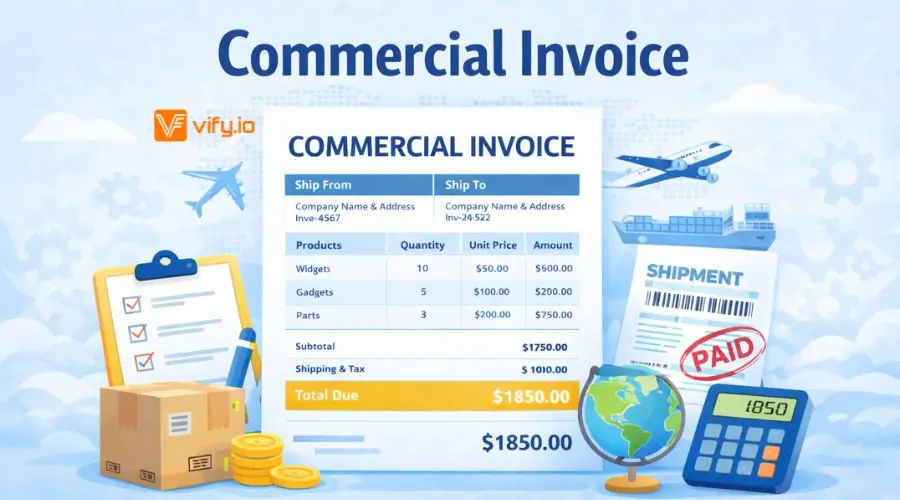
12. Commercial Invoice
Required for international trade, commercial invoices support customs clearance and tax calculations.
Examples: Zylker Electronics, a company based in the United States, exports 1,000 wireless headphones to a retailer in Germany. To comply with international trade regulations, Zylker Electronics issues a commercial invoice that includes the seller and buyer details, product descriptions, quantities, unit prices, total value, country of origin, and applicable taxes and duties. This commercial invoice is used by customs authorities to calculate import taxes and clear the shipment.
13. Recurring Invoice
Recurring invoices are sent automatically at regular intervals for subscription-based or ongoing services.
Examples: Internet services, gyms, SaaS platforms, and streaming subscriptions.
Invoice Formats
Invoices can also be categorized by how they are created and processed.
14. Digital Invoice
Created using software or templates, digital invoices are widely used and can be customized and automated.
Example: A Shopify store owner uses invoicing software to generate a digital invoice after a customer places an order online. By entering the product details, quantities, prices, and tax information into the system, the software automatically creates a professional digital invoice in PDF format. The invoice can be customized with the store’s logo and branding and is sent to the customer via email within seconds.
15. E-Invoice
E-invoices use structured electronic formats that allow systems to exchange and process invoices automatically, often mandated by governments for tax compliance.
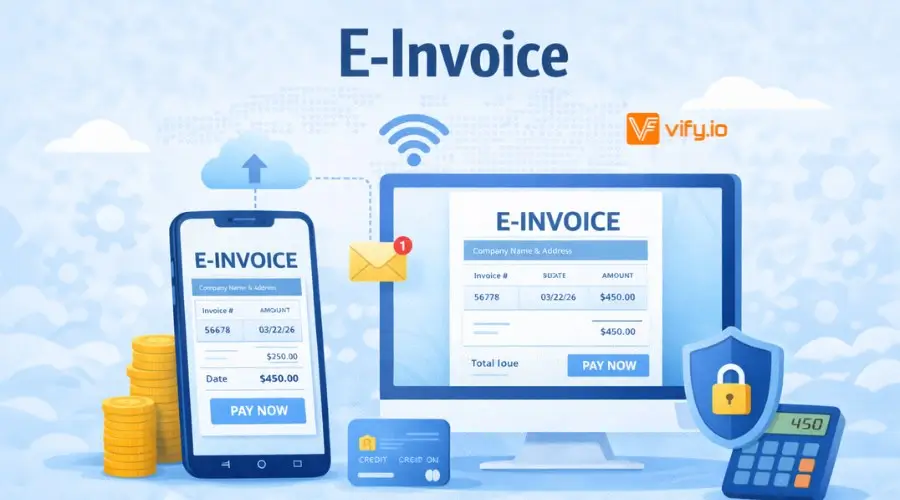
Example: A manufacturing company in Italy issues an e-invoice to a domestic customer using a government-approved e-invoicing system. The invoice is generated in a standardized electronic format and automatically transmitted to the tax authority before being delivered to the buyer. Both the seller’s and buyer’s accounting systems can process the e-invoice without manual input, ensuring tax compliance and reducing errors.
Conclusion
Understanding different types of invoices helps businesses invoice accurately, remain compliant with regulations, and maintain consistent cash flow. Choosing the right invoice at the right stage of a transaction improves operational efficiency, reduces payment delays, and builds stronger, more professional relationships with customers.