
In recent years, there has been a growing interest in Progressive Web Apps (PWAs) as an alternative to native apps and traditional web apps. PWAs are web applications that provide a user experience similar to native apps while utilizing the capabilities of modern web browsers. Thanks to the technology’s application, it offers a mobile experience like an application. This is a type of a type of web application that offer a range of benefits over traditional web apps and native mobile apps.
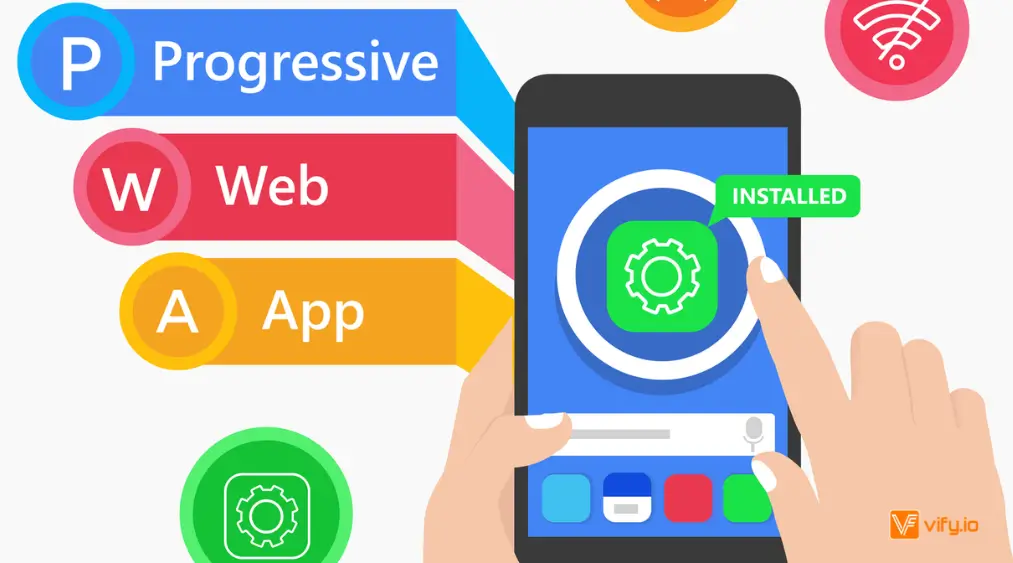
What is a PWAs (Progressive Web Apps ) ?
Therefore, Progressive web apps sit between traditional websites and native apps, using web technologies to deliver app-like functionality. They combine the strengths of both—for example, enabling offline use and push notifications like an app, while still supporting features such as search engine indexing like a website.
In this article, we will explore the key advantages of PWAs, including faster loading speeds, offline access, improved user experience, cost efficiency, and better discoverability. By the end, you’ll have a clear understanding of why they are becoming increasingly popular among businesses and developers alike.
Advantages of Progressive Web Apps (PWAs)
Google reward this development
Google directs more and more efforts in the mobile and positions better these webs, not only for the architecture of the web that is responsive but also because it gives better positioning to those websites with less load time in the mobile. Beware, not all browsers allow to see PWA, but the main ones like Chrome or Firefox, as well as that has already been integrated by Microsoft.
PWAs can be used as an App
PWA is a website allowing offline browsing as an app and delivers notifications on the mobile, among other advantages. As an inconvenience, notifications do not work for now in iOS.
Faster loading speed

One of the primary advantages of Progressive web apps is their fast loading speed. They use service workers—a web technology that enables offline functionality and data caching—so the app can continue to run even with a slow or unstable internet connection. As a result, they load much faster than traditional web apps, significantly improving the user experience.
Another key benefit is their lightweight nature. These apps often require less than 1 MB, delivering exceptional speed and performance—an important advantage in today’s mobile-first world.
Work on Offline Mode
As mentioned earlier, PWAs can work offline using service workers. This means that users can continue to use the app even when they are not connected to the internet. This can be particularly useful for users in areas with limited connectivity or for users who travel frequently.
Easier installation
Unlike traditional web apps, PWAs can be installed by users, making them more accessible and convenient. When a user visits a PWA, they will be prompted to add the app to their home screen. This means that the app can be easily accessed and launched, even without an internet connection.
Cost-Effective
Developing native apps for multiple platforms can be both expensive and time-consuming. In contrast, Progressive web apps can be built using widely adopted web technologies such as HTML, CSS, and JavaScript, supported by a large developer community. This allows businesses to save costs by creating a single solution that works across multiple platforms, rather than developing separate versions for each one.
No App Store Approval Process
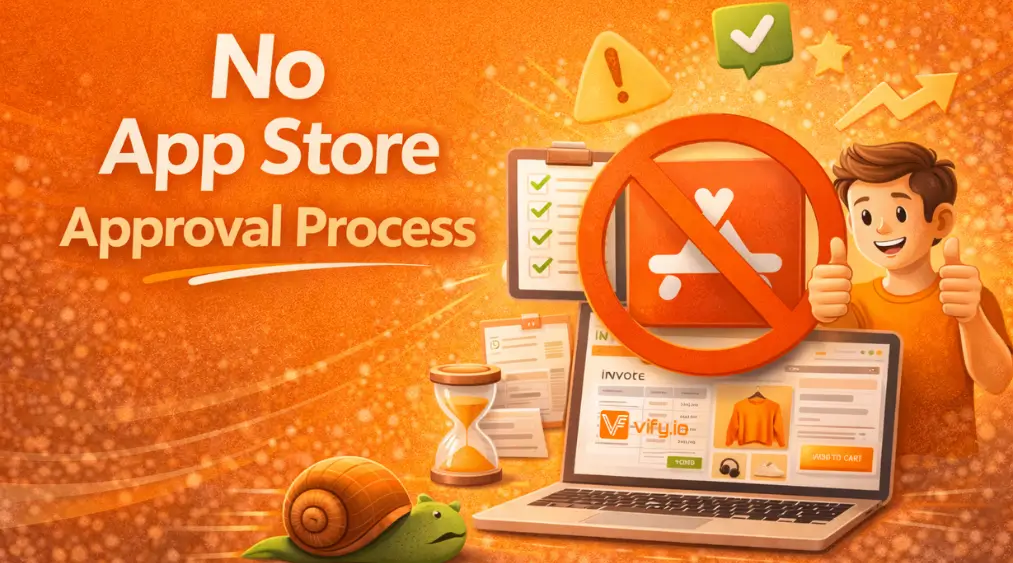
When developing a native app, developers must go through an app store approval process before their app can be published. This process can be time-consuming and may result in the app being rejected. In contrast, PWAs can be published without going through an approval process. This can save time and reduce the risk of rejection.
Push Notifications
PWAs can also utilize push notifications to engage users and provide timely updates. Push notifications are similar to those used by native apps, but they can be implemented in PWAs using web technologies. This can be a powerful tool for businesses to increase user engagement and retention.
Increased discoverability by search engine
Another advantage of PWAs is that they are easily discoverable by search engines. PWAs are essentially web apps, which means that they can be easily indexed by search engines like Google. This can make it easier for users to find the app and increase its visibility. Additionally, PWAs can be added to the user’s home screen, making them more accessible and convenient.
Improved user experience & conversions
Progressive web apps provide a seamless user experience across various devices and screen sizes. Unlike native apps, which often require separate versions for each platform, they can adapt automatically to different environments. This allows developers to build a single version that works effectively across multiple devices. In addition, they can run in full-screen mode, offering a more app-like feel and enhancing the overall user experience.
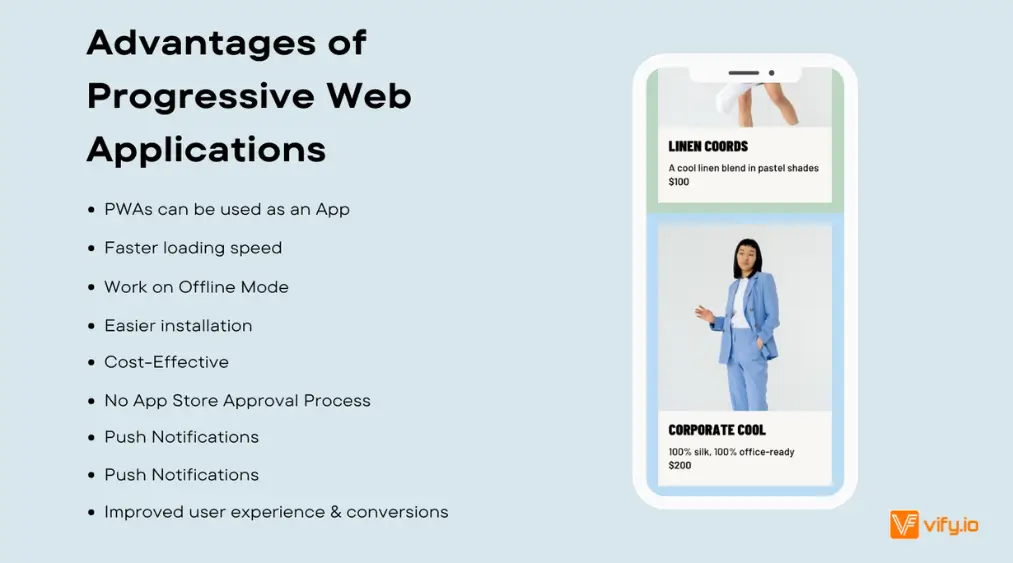
All the above elements give the user a better usability experience translating into more and better conversions and more excellent SEO positioning. For example, AliExpress improved conversions for new users in all browsers by 104% and in iOS by 82%. Another example is Extra Electronics; the push notifications from the PWA helped users spend twice as much time on the site. Or Alibaba, which increased conversions by 76%. Therefore, the companies that are best suited to have a PWA are the e-commerce, since the loading times and the app type navigation increase in the duration session’s and a decrease in the bounce rate, improving conversions. Service companies may also be interested in using PWA for push notifications allowing users to transfer notices or interact with the user.
To measure the PWA speed, we can do it in a simple way: with Lighthouse, a Chrome extension developed by Google, which provides a specific report on the PWA’s operation.
Conclusion
In summary, Progressive Web Apps (PWAs) offer several advantages over traditional web apps and native apps. PWAs are cost-effective, easily discoverable by search engines, and can work offline. Additionally, PWAs provide a seamless user experience across different devices and screen sizes. With the use of service workers and push notifications, PWAs can engage users and provide timely updates. Furthermore, PWAs can be easily installed by users and do not require an app store approval process. As more businesses and developers adopt PWAs.
If you’re selling on Shopify and need a professional invoice solution, especially one that’s easy to customize without any coding skills, then Vify’s Shopify Order Printer app is the best choice for you. Try it for free today and experience it for yourself. We’re confident you’ll love it.