

The Shopify app marketplace connects merchants looking to improve their stores with developers building and selling Shopify apps. For merchants, understanding app quality, pricing, and available features helps make better purchasing decisions. For developers, marketplace fees and revenue-sharing rules directly affect app profitability. This guide explains how the marketplace works for both sides, breaks down its costs with practical examples, and explores what to consider when choosing or developing a Shopify app.
What is the Shopify App Marketplace?
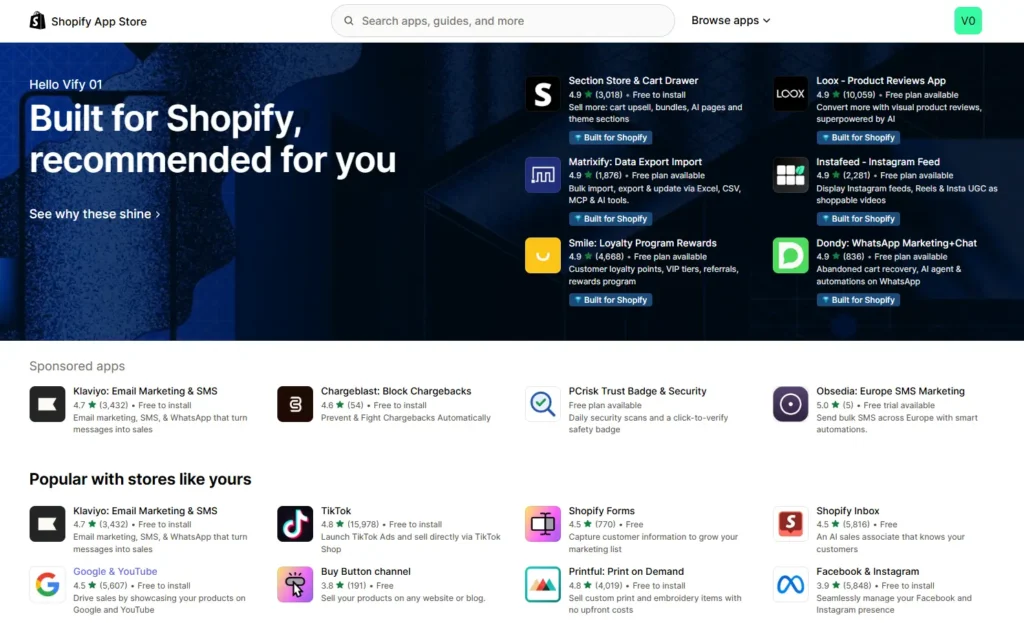
Shopify’s official name for its app marketplace is the Shopify App Store. People use “Shopify app marketplace,” “app marketplace Shopify,” and “Shopify App Store” for the same place: a catalog of apps from Shopify and independent developers that merchants install to add features to their store. If you want the merchant-side walkthrough of searching, evaluating, and installing, our guide to the Shopify App Store covers it step by step.
The marketplace is large, but nobody agrees on exactly how large. Shopify’s annual filing reported more than 21,000 apps at the end of 2025, while an independent June 2026 snapshot counted about 22,500 live listings. The takeaway is that a merchant can find an app for almost any job, and a developer enters a crowded field.

How the app marketplace Shopify runs works
The marketplace works because three parties each have a different set of costs, rules, and incentives.
| Party | What they do | What they pay or earn |
|---|---|---|
| Merchants | Install apps and use them in their store | Pay each app’s price, billed through their Shopify invoice or by the developer |
| Developers | Build and publish apps for many merchants | Pay a one-time registration fee, then revenue share above a threshold, plus a processing fee |
| Shopify | Reviews apps, runs search and ranking, handles billing | Earns revenue share and processing fees from developers |
One important detail for merchants: under Shopify’s developer terms, Shopify charges the revenue share and processing fee to developers, not as a marketplace fee added to an app’s listed price. That developer-side cost is the subject of the next section.
What developers pay to list on the Shopify App Marketplace
According to Shopify’s developer documentation, the costs are:
| Cost | Amount | Notes |
|---|---|---|
| Registration | $19, one time per Partner account | Required to distribute an app through the App Store |
| Revenue share on the first $1,000,000 | 0% | Lifetime gross app revenue, counted from January 1, 2025 |
| Revenue share above $1,000,000 | 15% | Applies to all revenue above the lifetime threshold |
| Payment processing fee | 2.9% on all billing | Charged separately from revenue share, plus applicable tax |
| Large developers | 15% on all revenue | Developers with $20 million or more in prior-year App Store earnings, or $100 million or more in company revenue, get no 0% band |
Two points surprise people. First, the $1 million threshold is lifetime, not annual: it stopped resetting each year for revenue earned from January 1, 2025. Second, the 2.9% processing fee applies from the first dollar, even while revenue share is 0%.
Developers who build apps for only one merchant do not need to register or pay the fee. Shopify’s documentation says registration isn’t required for custom apps built for a single merchant, but any app distributed to multiple merchants must be published through the App Store.

How apps get listed and reviewed
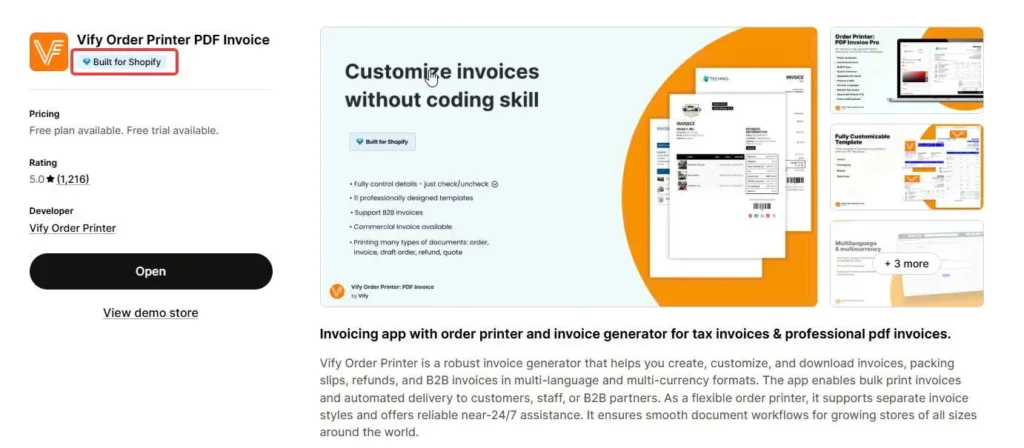
Public apps go through a review before they appear in the marketplace. The process describes three core areas reviewers check: security and trust, functionality, and the installation and onboarding experience. Shopify also runs a higher tier called Built for Shopify, which adds requirements such as strong performance and the use of modern integration standards. About 7% of apps carry the badge, according to an independent June 2026 snapshot.
For merchants, the review is a floor, not a guarantee of fit. It screens out apps that fail basic checks, but it does not tell you whether an app is the best value or a good match for your store. Our merchant guide to choosing apps explains how to read the badge before you rely on it.
How to list an app on the Shopify App Marketplace
If you are a developer, the process looks like this:
- Create a Shopify Partner account and register for App Store distribution, which has a one-time $19 fee.
- Build the app on Shopify’s APIs, using current standards so it can qualify for performance requirements later.
- Prepare your listing with a clear description, screenshots, and pricing tiers that match how your app creates value.
- Submit the app for review and fix any issues reviewers raise.
- After approval, publish the listing, and then work on reviews, support, and performance, which drive visibility and installs over time.
A free plan or free trial lowers the barrier for new merchants, and the pricing model matters. Per-order or per-contact pricing grows with the merchant’s success, while flat pricing is simpler but can leave money on the table. Whatever you choose, remember that merchants compare prices at their own volume.
Conclusion
The Shopify app marketplace works because its rules are cheap for developers to enter and standardized for merchants to use. For merchants, that means plenty of choice and a quality floor, with reviews and badges as imperfect signals. For developers, it means a low-cost start that becomes meaningfully more expensive once an app passes $1 million in lifetime revenue. Use the economics to judge what a price really includes, and decide whether a marketplace app, a free plan, or a custom build fits your goals.
For Shopify stores looking for a professional invoice solution that’s easy to customize without any coding, Vify Shopify Order Printer app is worth considering. Try it for free today and see how it fits your store’s needs.
FAQs
What is the Shopify app marketplace?
It is the Shopify App Store, the official catalog of apps from Shopify and independent developers that merchants install to add features. Shopify reviews public apps before they are listed, and merchants pay for them through Shopify billing or the developer.
How much does it cost to list an app on the Shopify app marketplace?
Registering to distribute an app through the App Store costs a one-time $19 per Partner account. After that, developers pay a 2.9% processing fee on billing and, once lifetime gross app revenue passes $1 million, a 15% revenue share on the amount above it.
What revenue share does Shopify take from app developers?
Shopify takes 0% on the first $1,000,000 of lifetime gross app revenue, counted from January 1, 2025, and 15% above that. Developers with $20 million or more in prior-year App Store earnings, or $100 million or more in company revenue, pay 15% on all revenue.
Do merchants pay extra fees to use the Shopify app marketplace?
Under Shopify’s developer terms, the revenue share and processing fee are charged to developers, not added to the listed price as a marketplace fee. Merchants pay the app’s own price, which is usually billed on their Shopify invoice. Some apps bill outside Shopify, so check the listing.
Can I use apps that are not in the Shopify app marketplace?
You can have a custom app built for your own store, and such apps do not need App Store registration. Unofficial apps from outside the marketplace skip Shopify’s review, so check the developer and the permissions carefully before installing.