
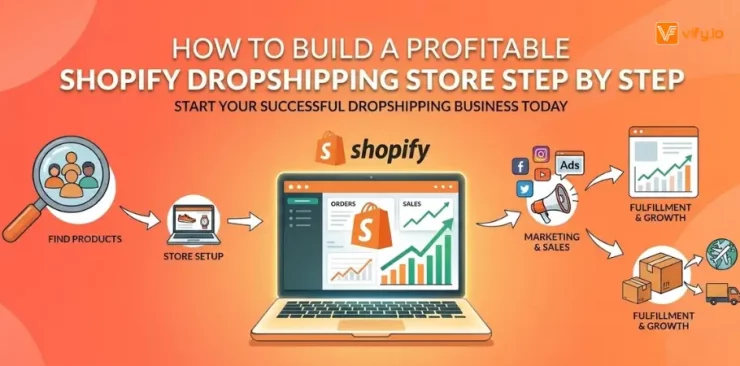
The global dropshipping market is growing rapidly, making a Shopify dropshipping store one of the most accessible ways to start an online business with low upfront costs. By selling products without holding inventory, you can focus on building your brand and driving sales — but success depends on choosing the right niche and strategy. This guide walks through how to build a profitable Shopify dropshipping store step by step, with practical insights to help you launch faster, avoid common mistakes, and scale efficiently.
What Is a Shopify Dropshipping Store & How It Works
A dropshipping store on Shopify is an online retail business that uses Shopify as its storefront and e-commerce infrastructure while fulfilling customer orders through third-party suppliers — without holding any physical inventory.
The operational flow is straightforward:
- A customer places an order on the Shopify store and pays the retail price.
- The store owner receives the order and forwards it to the designated supplier at the wholesale price.
- The supplier packages and ships the product directly to the customer under the store’s branding or a neutral label.
- The store owner retains the difference between the retail and wholesale price as profit.
How to Choose a Profitable Niche for Your Dropshipping Shopify Stores
Niche selection is arguably the most consequential decision a store owner will make. A well-chosen niche determines product-market fit, competitive positioning, and long-term profitability. Entering an overly broad or saturated category without differentiation is one of the leading causes of failure for new dropshipping Shopify stores.
Criteria for a Viable Dropshipping Niche
A strong niche for a dropshipping store on Shopify typically satisfies three criteria:
- Sufficient demand: There must be a demonstrated and consistent audience seeking the product.
- Manageable competition: Niches dominated by large established brands or well-funded advertisers are difficult for new stores to penetrate. Look for markets where independent Shopify dropshipping stores can compete on brand, content, or service.
- Healthy profit margins: After accounting for product cost, Shopify subscription fees, advertising spend, and transaction charges, the net margin should justify the effort. As a general benchmark, margins above 20–30% provide adequate room for sustainable growth.
Tools to Validate Your Niche
- Google Trends: Identify whether search interest is growing, declining, or seasonal.
- Meta Ads Library: Review competitor advertising activity to gauge market demand and messaging angles.
- Amazon Best Sellers: Confirm product viability through established consumer purchasing patterns.
- Jungle Scout or Helium 10: For deeper product research and sales volume estimates.
Setting Up Your Dropshipping Store on Shopify — Step by Step
Once a niche has been validated, the practical work of building the store begins. The following steps outline the recommended sequence for launching a professional, conversion-optimised dropshipping store on Shopify.
Step 1: Create a Shopify Account
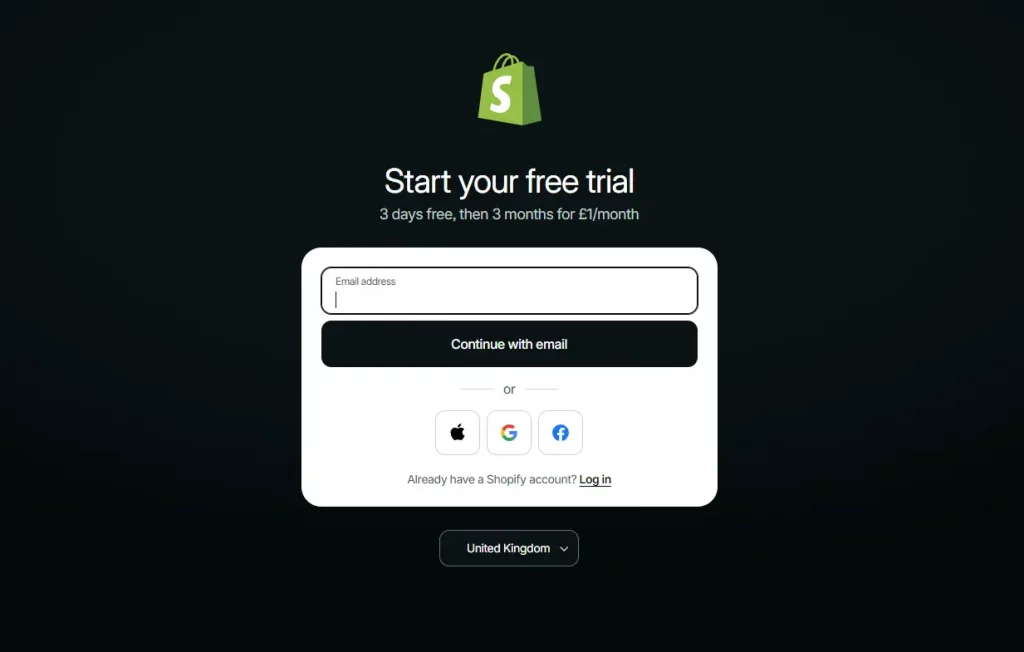
Navigate to Shopify.com and begin a free trial, which currently lasts 3 days without requiring payment details. During registration, select a store name that is memorable, brand-appropriate, and ideally reflective of the chosen niche. Avoid generic names that limit future brand positioning. Once registered, the Shopify admin dashboard becomes the central hub for all store management activities.
Step 2: Choose a Theme Optimised for Dropshipping Stores
Shopify offers both free and premium themes through its Theme Store. For dropshipping stores on Shopify, themes designed for high-conversion retail — such as Dawn (free), Refresh, or Impulse — are recommended. Key considerations when selecting a theme include mobile responsiveness, page loading speed, product image display quality, and the availability of trust-building elements such as review sections and trust badges. A clean, professional storefront reduces buyer hesitation and directly impacts conversion rate.
Step 3: Connect a Dropshipping App
The dropshipping app serves as the operational bridge between the Shopify store and the supplier network. The most widely used options include:
- DSers (official AliExpress partner): Ideal for sourcing from Chinese suppliers at competitive prices.
- AutoDS: Offers automation features including price monitoring, automatic order processing, and supplier diversification.
- Zendrop: Focuses on faster shipping times and US-based warehousing options, which can significantly improve customer experience.
Once installed, the app enables the store owner to browse supplier catalogues, import product listings directly into the Shopify store, and automate order forwarding.
Step 4: Import and Optimize Product Listings
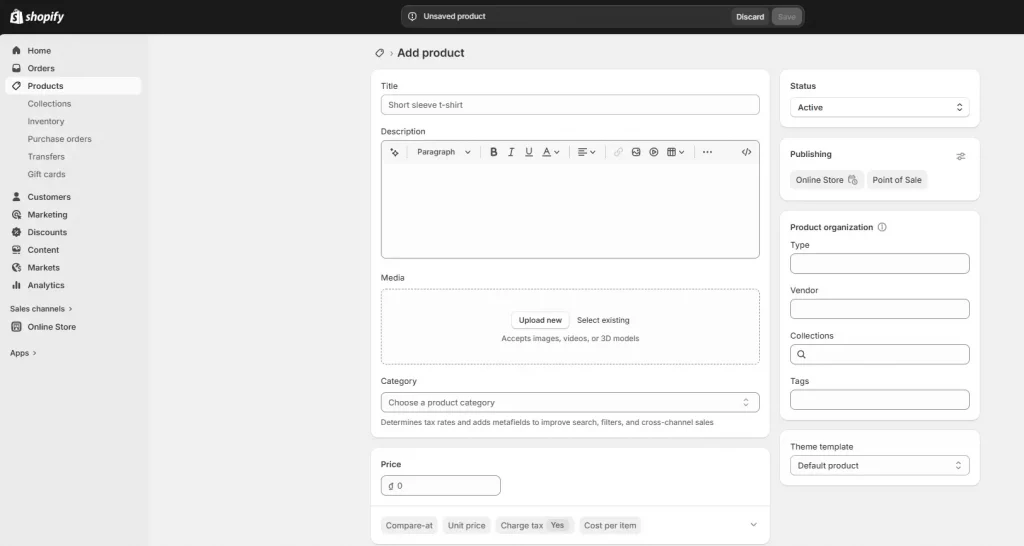
Importing a product from the supplier is only the beginning. Unedited supplier listings — with generic descriptions, inconsistent imagery, and unformatted titles — underperform significantly compared to professionally optimised ones. For each product listed in the dropshipping store on Shopify, the following optimisations are essential:
- Title: Rewrite to be clear, keyword-rich, and benefit-oriented rather than relying on supplier codes or technical jargon.
- Description: Craft compelling copy that addresses customer pain points, highlights key features, and builds desire. Avoid copying the supplier’s original text verbatim.
- Images: Remove supplier watermarks. Where possible, source lifestyle photography or use AI image enhancement tools to improve visual quality.
- Pricing: Set retail prices that reflect perceived value, competitive positioning, and desired margin rather than simply applying a fixed multiplier.
Step 5: Configure Payments, Shipping Zones, and Taxes
Before the store can accept orders, three operational configurations must be completed. For payments, Shopify Payments is the recommended gateway as it eliminates third-party transaction fees and supports major credit cards, Apple Pay, and Google Pay. For shipping, define shipping zones and rates that are transparent and competitive — unexpected shipping costs at checkout are a leading cause of cart abandonment. For taxes, configure the store to comply with the tax regulations applicable to the target market; Shopify provides automated tax calculation tools that simplify this process for most regions.
Marketing Your Shopify Dropshipping Store
A well-built store with optimised product listings will generate no revenue without traffic. Marketing is, therefore, not an optional phase of the business — it is the engine that drives growth.
Paid Advertising: Meta and TikTok
Paid social advertising remains the fastest route to initial sales for most dropshipping stores. Meta Ads (Facebook and Instagram) provide granular audience targeting based on interests, behaviours, and demographics — allowing store owners to reach potential customers with surgical precision. TikTok Ads, meanwhile, offer a lower cost-per-click in many product categories and a format well-suited to product demonstrations and viral content.
For new stores, a recommended starting strategy is to allocate a modest daily testing budget (USD 20–50 per ad set), run multiple creative variants simultaneously, and identify the top-performing combinations before scaling spend. Without data-driven testing, advertising budgets are quickly depleted without meaningful return.
SEO for Shopify Dropshipping Store Product Pages
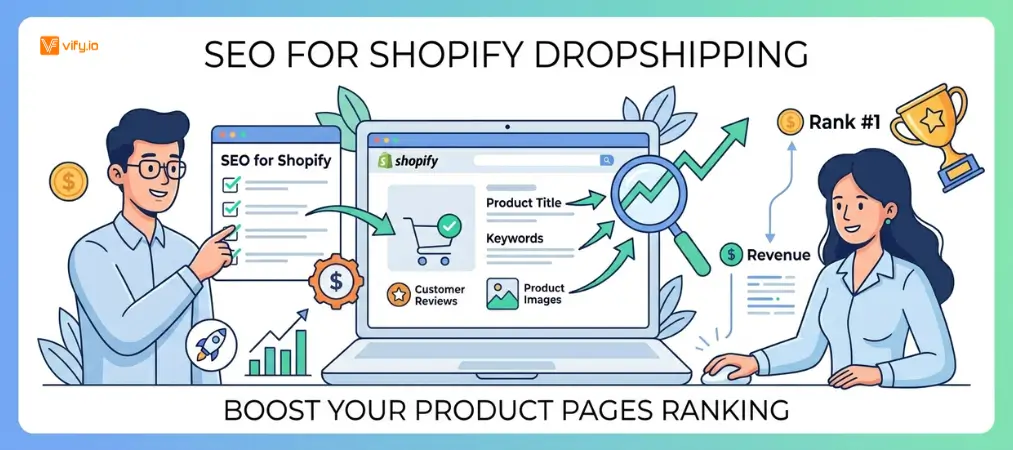
Search engine optimisation provides organic, compounding traffic over time. For a dropshipping store on Shopify, the highest-priority SEO tasks include optimising product page titles and meta descriptions with target keywords, building informative collection pages that rank for category-level search terms, and publishing blog content that attracts potential customers in the research phase of the buying journey. Shopify’s built-in SEO fields make these optimisations accessible even for non-technical users.
Email Marketing and Retargeting
Email marketing consistently delivers one of the highest returns on investment of any digital channel. For dropshipping Shopify stores, automated email flows that recover abandoned carts, welcome new subscribers, request post-purchase reviews, and re-engage lapsed customers are important. These flows operate continuously in the background, generating revenue without ongoing manual effort. Paired with retargeting ad campaigns that re-engage website visitors who did not convert, email represents a critical component of a mature store’s marketing infrastructure.
Conclusion
Building a profitable Shopify dropshipping store requires more than just launching products — it’s a structured process that rewards careful planning, smart execution, and long-term thinking. Successful dropshipping Shopify stores consistently show that real growth comes from creating a trustworthy brand, not chasing short-term wins. Whether you’re aiming for side income or a full-time venture, a well-executed dropshipping store remains one of the most scalable and accessible ways to succeed in e-Commerce today.
If you’re selling on Shopify and need a professional invoice solution, especially one that’s easy to customize without any coding skills, then Vify’s Shopify Order printer app is the best choice for you. Try it for free today and experience it for yourself. We’re confident you’ll love it.



[…] 🌟 New to dropshipping? Explore How to Build a Profitable Shopify Dropshipping Store Step by Step […]
okay bro